
Restoring Lake Superior's Coastal Wetlands, One Bay at a Time
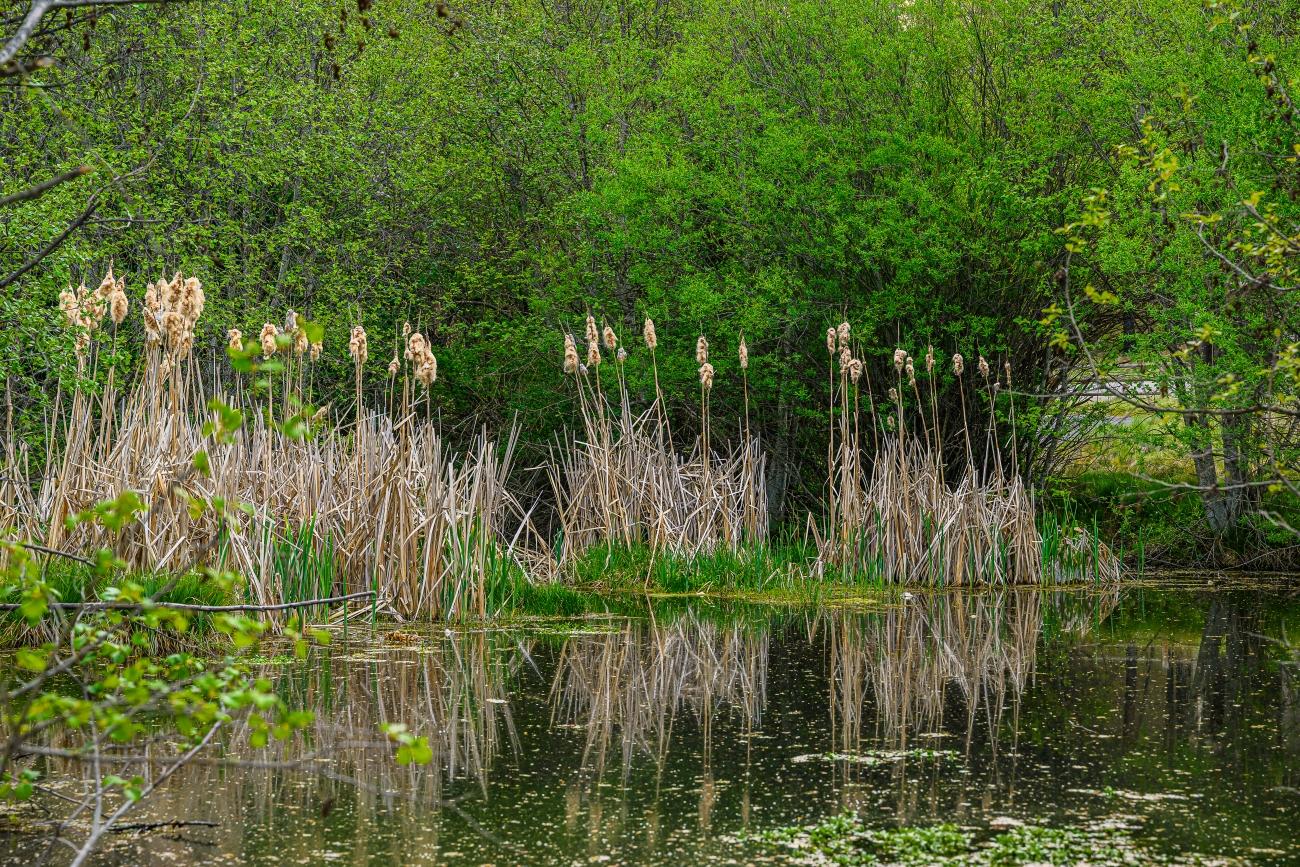
Cattail bed with seeds ready to disperse in the wind. Photo by Bridget Mayfield/USFWS, public domain.
Wetlands are complex ecosystems, but one plant dominates many of them — the cattail. Historically, cattails were important to the Anishinaabe people of the Great Lakes. The entire plant is edible, and its rhizomes, shoots, and pollen are rich in carbohydrates and nutrients. Cattail leaves were woven into baskets, chair seats, and mats, while the fluffy seeds later served as insulation for life jackets and mattresses. Cattails also play an important ecological role by stabilizing sediments and reducing erosion. Cattail beds provide homes for frogs, salamanders, raccoons, waterfowl, insects, and songbirds such as yellow-headed and red-winged blackbirds and marsh wrens.
What's the Problem?
If cattails are so useful, why do they need to be controlled? One reason is that human changes to the land have reduced the natural ability of wetlands to maintain their diversity. Around Lake Superior, the same development that allows people to live, work, and recreate has also reshaped coastal wetlands. Roads and dikes cut through marshes and disrupt water flow. Agricultural chemicals wash in from uplands, while timber harvest, farming, dredging, and shoreline construction increase erosion and fill wetlands with sand, silt, and clay. Shipping has further altered marshes and shorelines to support trade with distant ports.
The other reason is that non-native cattails have replaced the native species in many wetlands. Three cattail types grow in the region, but only broad-leaf cattail (Typha latifolia) is native. Native cattails behave themselves, coexisting within the wetland community without excluding other species. Narrow-leaved cattail (Typha angustifolia) and hybrid cattail, a cross between broad and narrow-leaved cattails, are introduced species that form dense stands. These can overtake large wetland areas, crowding out wild rice, known as manoomin in Anishinaabe, along with sedges and other wetland plants. Managing the overgrowth of non-native cattails in wetlands is a difficult and widespread problem in the United States and in Europe. Managers have tried many approaches to control cattail overgrowth, including herbicide, cutting and removing above-ground biomass, burning, crushing or grinding rhizomes, and combinations of these methods.
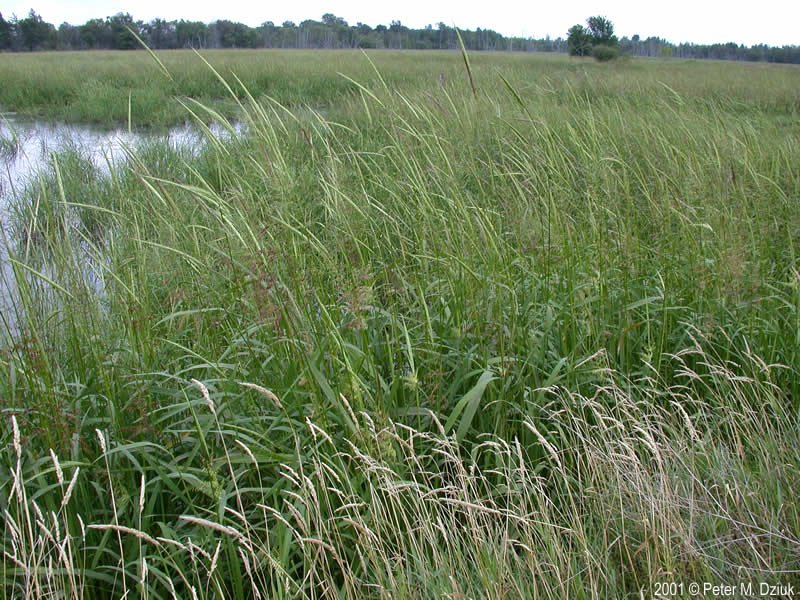
Wild rice (Zizania palustris). Photo by Peter M. Dziuk.
Despite these challenges, Wisconsin's coastal marshes still support hundreds of species of plants, fish, amphibians, birds, mammals, and insects. They are among the most intact coastal wetlands in the Great Lakes. Wisconsin's resource managers are combining traditional ecological knowledge with modern Western science to restore these marshes and strengthen their resilience so they can support even more species.
Learning from the Experts
One wetland animal is a big fan of cattails. Muskrats use cattail rhizomes for food and foliage to build their lodges. Muskrats cut the stalks below the waterline, which drowns the plants, and they use the stems to build their lodges. These lodges, in turn, provide resting and nesting sites for waterbirds.
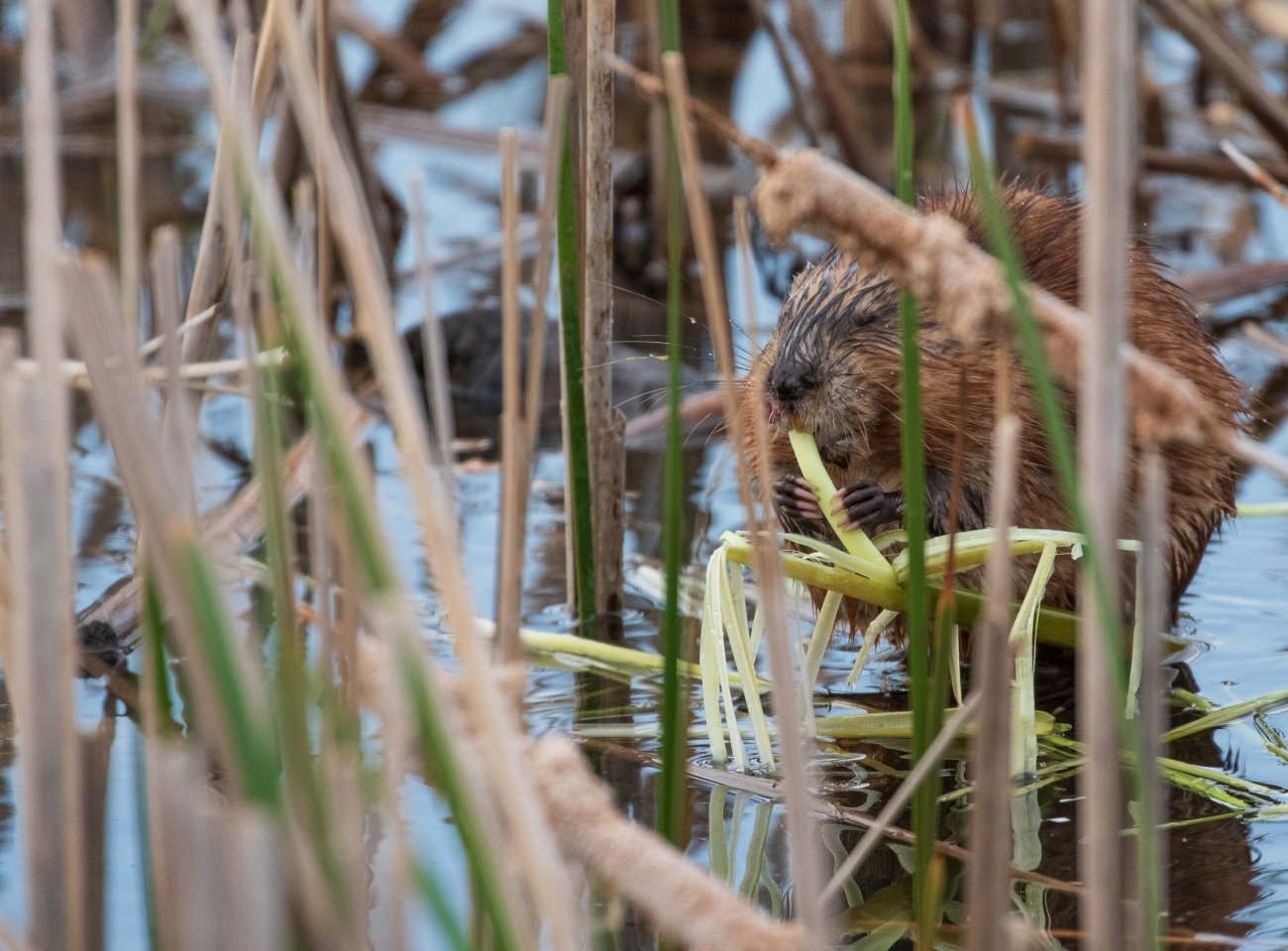
Muskrat eating cattails. Photo by Mike Budd/USFWS, public domain.
In areas with native cattails, muskrats can help maintain a "hemi-marsh" — roughly half emergent vegetation and half open water with aquatic plants — an ideal habitat mix for many birds and other wildlife. Unfortunately, where cattail overgrowth is a problem, the muskrats aren't keeping the cattails in check. Muskrat populations may be too low, or hybrid cattails may grow too quickly for muskrats to keep pace. Muskrat burrowing can also undermine dikes and roads, making them unwelcome to managers responsible for infrastructure. Even so, muskrats deserve credit for highlighting a cattail-control method that is showing some promise.
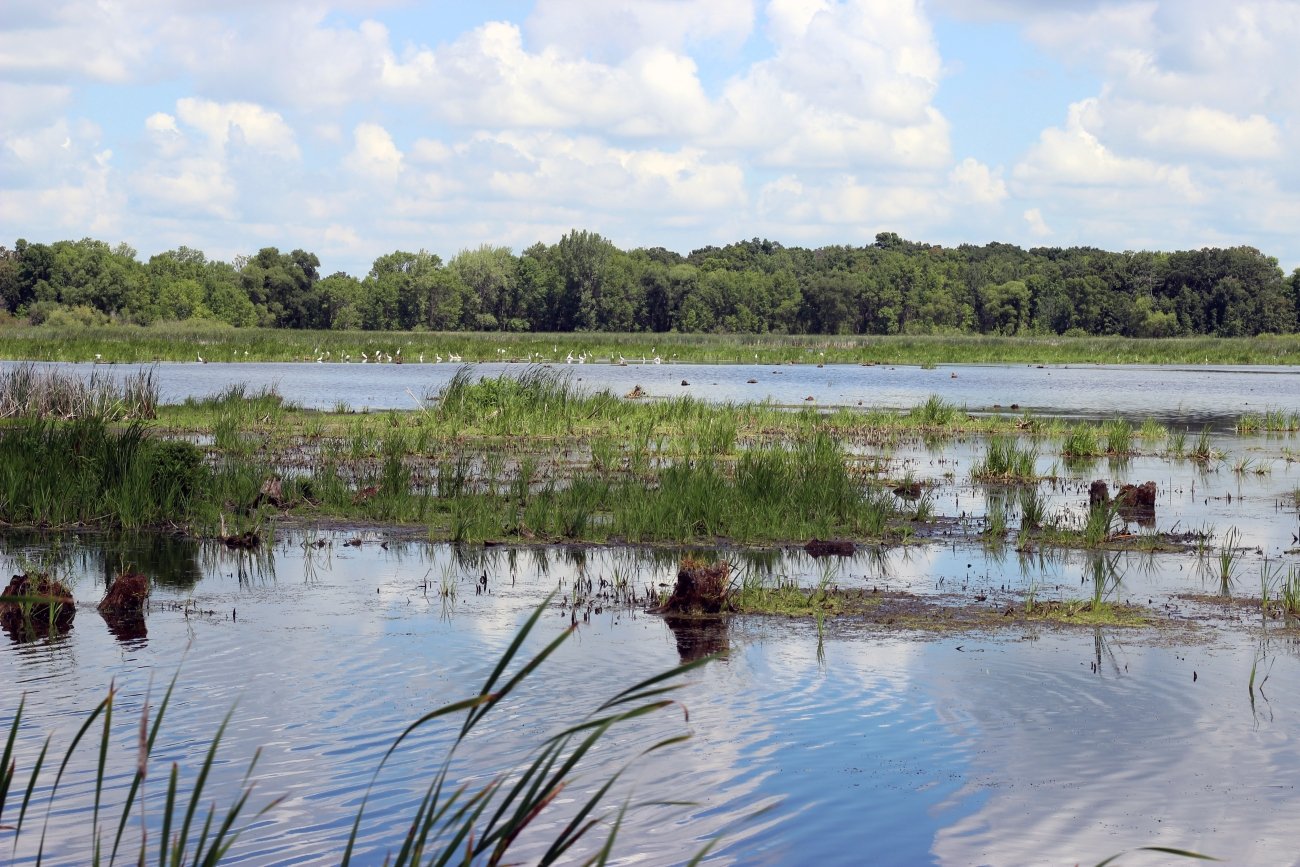
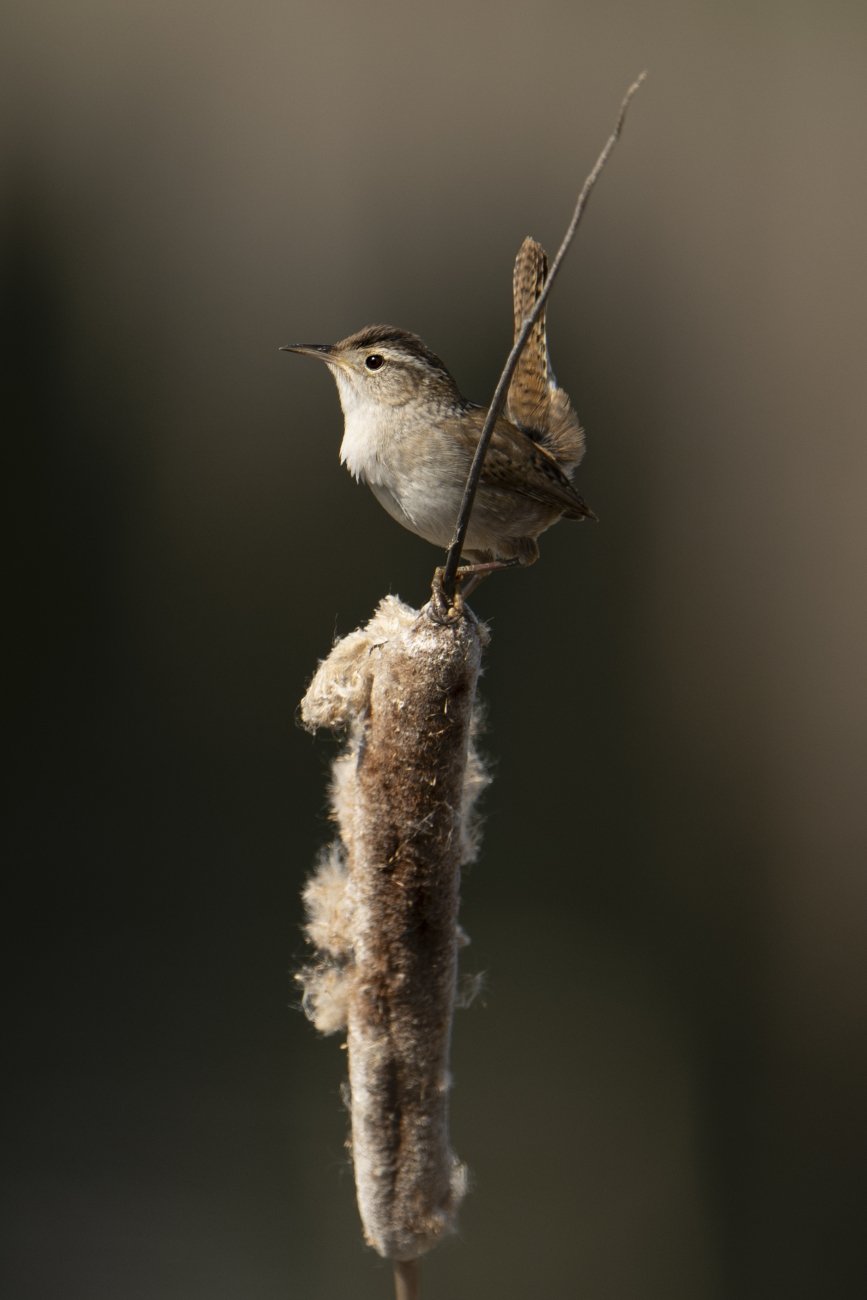
A hemi-marsh at Horicon Marsh, roughly half water and half emergent vegetation. Photo by Courtney Celley/USFWS, public domain. A marsh wren, one of the species that depends on healthy cattail beds. Photo by Laurel Smith/USFWS, public domain.
Allouez Bay, St. Louis River Estuary
Audubon Great Lakes and the Wisconsin Department of Natural Resources have been restoring the wetlands in Allouez Bay, part of the St. Louis River Estuary near Superior, Wisconsin, since 2019. The project, funded by the EPA's Great Lakes Restoration Initiative, primarily aims to restore marsh bird habitat for species that once nested there, including black terns, yellow-headed blackbirds, and sedge wrens. The project has additional benefits, including expanding wild rice beds, increasing fish spawning habitat, and reducing erosion caused by dredging, shoreline construction, and Lake Superior seiches. The water in Lake Superior sloshes like a giant bathtub when strong winds and changes in atmospheric pressure push the water in one direction. The water may oscillate back and forth for hours or even days, creating a seiche.
The Allouez Bay project controls hybrid cattails by cutting them below the surface of the water, which can drown the plants if water levels remain high long enough. Cutting takes place in early to mid-August, and because the treatment area is large, crews use a Marsh Master to do the work. This is a vehicle designed to provide access to wetland terrain; for this project it was equipped with tools for cutting cattails below the water surface. The project partners chose not to employ herbicide in this project.
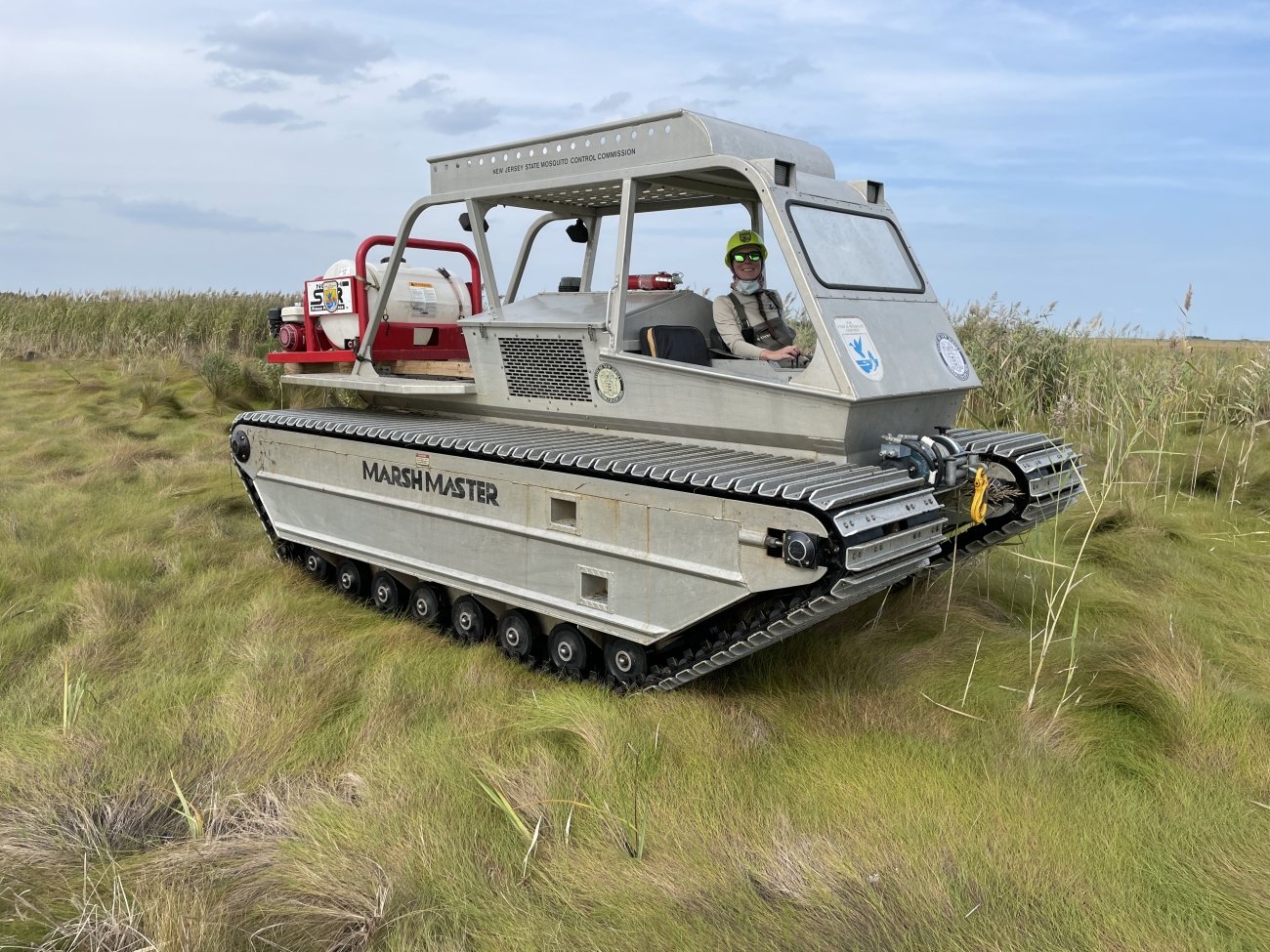
A Marsh Master, the type of vehicle used to cut cattails below the water surface. Photo by Kaity Ripple/USFWS, public domain.
Quantitative results are not yet available, but monitoring staff estimate hybrid cattail reductions of 20% to 80%, depending on location. "Control is weakest where water levels drop and expose the cut cattail stalks," says Kelly Beaster, plant ecologist with Tsuga Ecological Consulting, LLC, one of the project contractors. "After the cattails have been reduced, wetland plants like bulrushes, arrowheads, sedges, and Canada bluejoint grass are seeded to restore the marsh."
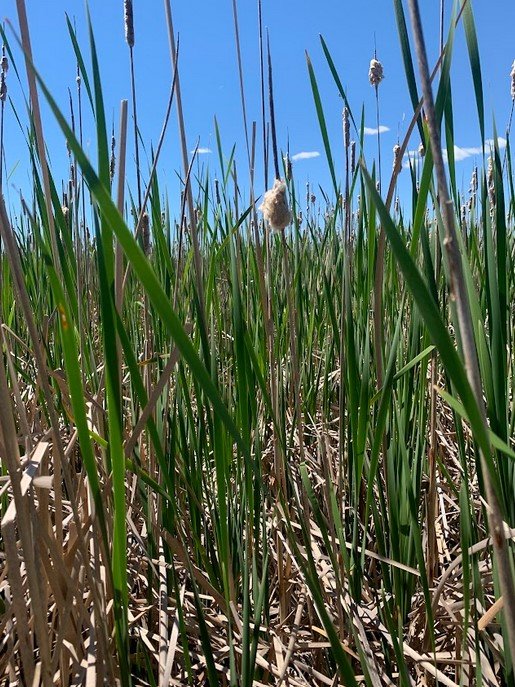
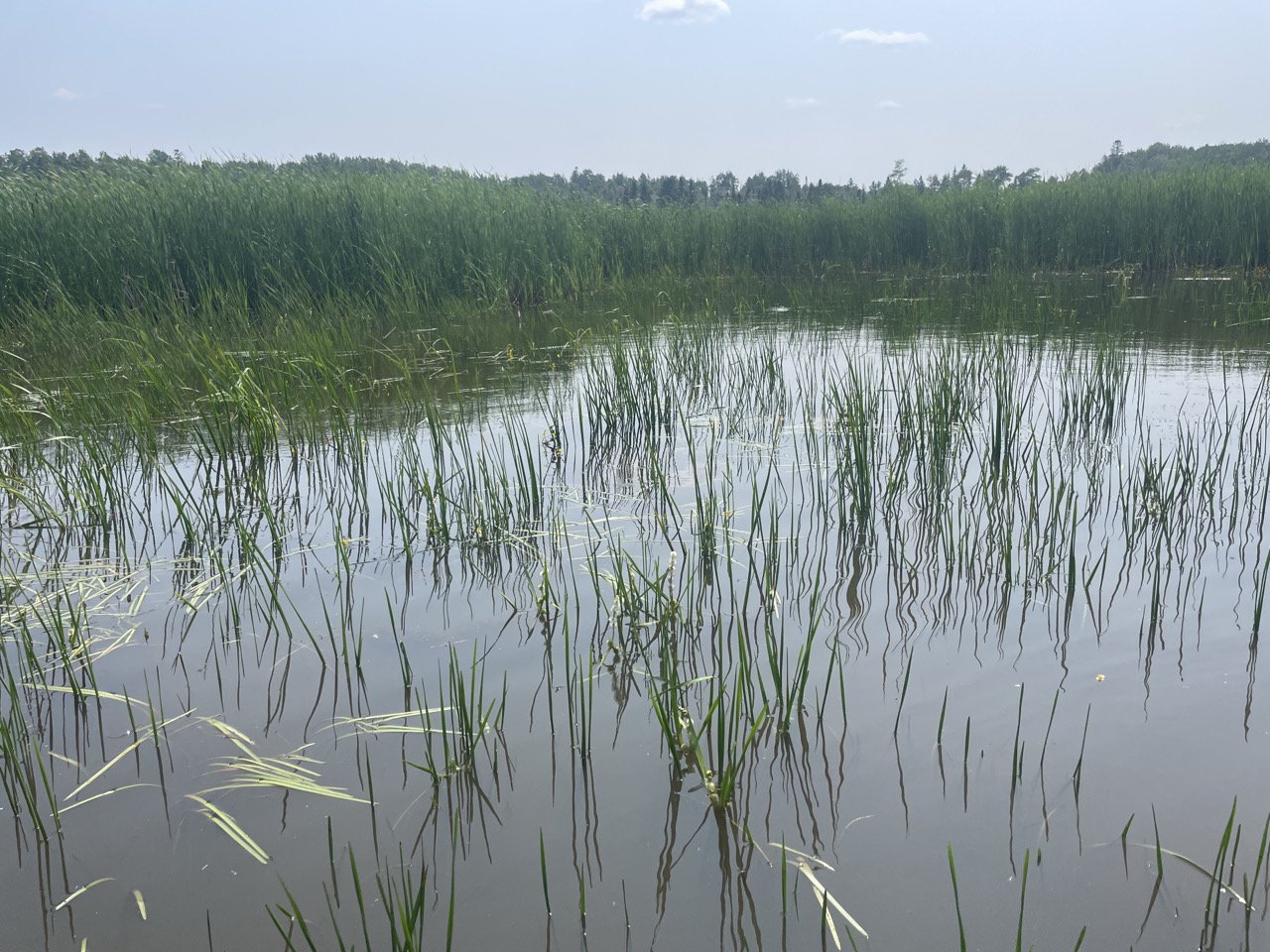
What 30% cattail cover looks like in the field, which doesn't count standing dead stalks. Even 30% cover shades out much of the other native species. A hemi-marsh within a constructed pothole at Allouez Bay, with cattail monoculture in the background. Photos by Kelly Beaster.
Monitoring Outcomes
Monitoring is a key component of any wetland restoration to help land practitioners learn what works. In Allouez Bay, the monitoring program focuses on assessing how well the cattails have been controlled and what wetland plant community takes its place.
"It's unlikely that one treatment will be enough to permanently restore the marsh," says Beaster, the plant ecologist overseeing the monitoring. "The cattails will likely need to be treated again over time, but at least we'll know if the methods we're using are working and we'll know how long this treatment lasts. Because we're not using herbicide, it is a strong field test of the underwater-cutting method on its own."
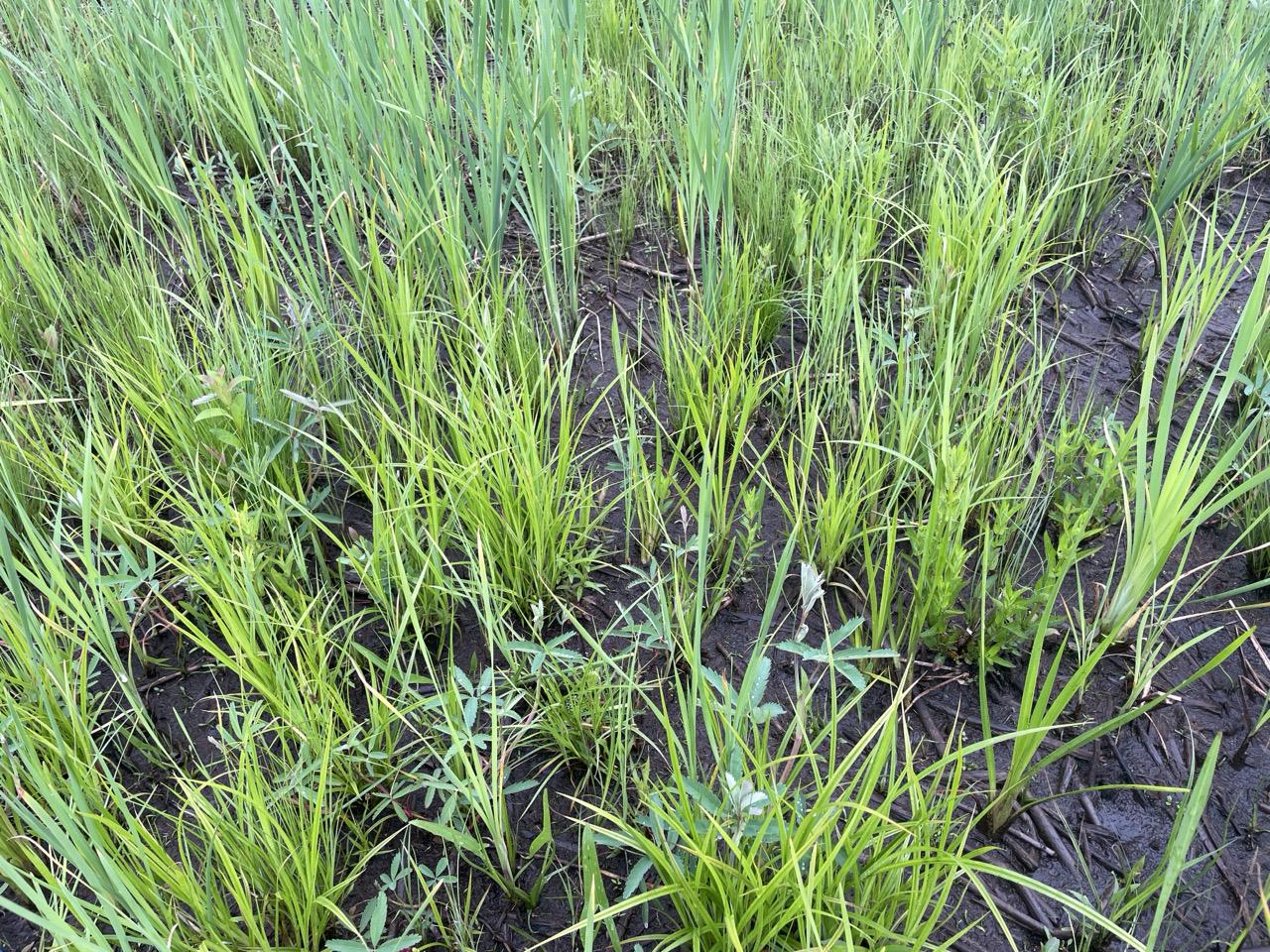
A successful restoration plot at Allouez Bay, with good recovery of native species alongside some cattails. Photo by Kelly Beaster.
Manoomin
"Wild rice, or manoomin, is very important to the Anishinaabe people of the Great Lakes," says Cherie Hagen, Natural Resources Basin Supervisor with the Wisconsin Department of Natural Resources and co-lead for the project. "It is an important food resource as well as having spiritual meaning." Wild rice has been planted in Allouez Bay since 2015, but waterfowl are known to eat the seed before it can germinate. Land practitioners have developed several methods to protect seeded areas from herbivory. "If wild rice beds can be restored in deeper water, it can spread to areas where cattails have been controlled," says Beaster.
Partnerships and Respect for Plant Beings
Many partners were involved in planning and implementing the Allouez Bay project. "Respecting all the plant and animal beings that occupy the wetland is a strong value for our Tribal partners," says Hagen. "The Anishinaabe consider plants their elders, teachers, and providers and thus deserve respect. That is one reason we aren't using herbicides in this project."
To help land practitioners and the public better understand how to respect and appreciate plant beings as part of a restoration project, the Great Lakes Indian Fish and Wildlife Commission has recently produced a guide to working with plants in restoration projects. The Ojibwemowin title, Ganawenindiwag — Working with Plant Relatives to Heal and Protect Gichigami Shorelines, was chosen for the guidebook because it describes the plant—human relationship from the Ojibwe perspective.
Partners on the Allouez Bay project include Audubon Great Lakes, the Wisconsin Department of Natural Resources, the City of Superior, Douglas County, the Fond du Lac Band of Lake Superior Chippewa, the Lake Superior Research Institute, the Minnesota Land Trust, the Lake Superior National Estuarine Research Reserve, the Natural Resources Research Institute, and the St. Croix Chippewa Indians of Wisconsin.
Prentice Park, Fish Creek Slough
Word about the Allouez Bay restoration spread east along Lake Superior to Ashland, Wisconsin, where cattails are also expanding into higher quality marsh habitat in Fish Creek Slough. Kevin Brewster, Restoration Coordinator with the Superior Rivers Watershed Association, is leading a new restoration project aimed at controlling overgrowth of cattails in Prentice Park, part of Fish Creek Slough and a popular recreation area on the edge of Ashland. This project is funded by the U.S. Fish and Wildlife Coastal Program, the Great Lakes Restoration Initiative, the Natural Resources Foundation of Wisconsin Rare Plant Fund, and Xcel Energy's Energizing the Future grant.
Engaging the Community
"We were excited to hear about the Allouez Bay project and we wanted to try the cattail control method here," says Brewster. "Our first cutting will take place in fall 2026. We're working in relatively shallow water, so we'll be using Jon boats and cutting cattails with hand tools. Like the Allouez Bay project, we aren't using herbicide. We're also gathering up the cut stems. Some plant fiber will be used to make small shelters to protect wild rice seeding from waterfowl herbivory, and the rest will be taken to Ashland's commercial composter."
Partners and volunteers are a big part of the Prentice Park project too. Because this area is heavily used by the public, a variety of outreach activities are planned. For example, people are excited about an upcoming workshop on how to weave cattail fiber for mats and other uses. One innovative use for cattail fiber is the making of small, geodesic domes to cover areas recently planted with wild rice and protect them from waterfowl herbivory. This technique was developed by the Macatawa Manoomin Marsh Project. "The designer of the domes is Sara Alsum-Wassenaar; she is on the Fine Arts faculty at Grand Valley State University in Allendale, Michigan," says Brewster. "We loved this idea because it uses cattail fiber and we wanted to try it here. The waterfowl will eat the wild rice seeds as soon as we plant them, so we must protect the seeding somehow."
Science Drives Restoration
The Prentice Park project is supporting several focused research projects, including sediment sampling to see if there are any viable wild rice seeds in the seedbank. "We didn't find any, so that means wild rice has been missing from the project area for some time," says Brewster. "We have also deployed water level loggers and are studying water quality. We want to provide the science that will help people make good restoration decisions in the future."
Partners on the Prentice Park project are the U.S. Fish and Wildlife Service, tribal partners through GLIFWC, and the City of Ashland. Grand Valley State University is collaborating on a wetland plant ecology study of Fish Creek Slough. The Burke Center provides some field and lab gear, and a grant from the Chequamegon Bay Arts Council supports the protective dome crafting project.
Many Ways of Learning
The knowledge needed to restore wetlands has many roots, including expertise that evolved with the muskrat, knowledge and respect for plant beings gained by the Anishinaabe people over thousands of years in the Great Lakes region, and more recent scientific hypothesis testing. We're looking forward to learning more about controlling cattails and restoring ecological balance in wetlands from the Allouez Bay and Prentice Park projects. Whatever we learn can be applied elsewhere in the Great Lakes states. I'm heading to the kitchen now to check out some manoomin recipes!