
Safe Culverts Save Money
Everything you didn't know about culverts and why we need to fix them
How many streams did you drive over today or this week? There are approximately 1,200 culverts crossing streams in Ashland County, WI alone. Did you ever think about what would happen if even a few of them failed? That's what happened in July 2016 when a huge storm stalled over northern Wisconsin, dropping up to 14 inches of rain in some locations. Many roads experienced washouts where they crossed rivers and streams, disrupting travel for many days or weeks across the region.
What's the Problem?
"There are about 4,700 stream crossings on public roads in Wisconsin's Lake Superior watershed," says Chris Ester, Hydrologist with the U.S. Forest Service. "An estimated 3,100 of these stream crossings feature sub-standard culverts that are too small and/or too high, leading to either high risk of failure or environmental impacts." Here are more surprising statistics compiled by Ester's office:
- 47% of the 4,700 stream crossings on public roads in Wisconsin's Lake Superior watershed are highly likely to fail in a flood.
- 43% of these 4,700 stream crossings negatively impact stream form and function.
- Lake Superior stream crossings are estimated to discharge 2,350 tons of sediment annually to Lake Superior streams. A flood as large as the 2016 flood could discharge as much as 45,000 tons of sediment.
- These crossings have blocked an estimated 2,964 miles (of 6,009 total miles) of tributaries draining into Lake Superior in Wisconsin, preventing free passage of aquatic organisms like fish, turtles, and mussels from moving upstream (this is called aquatic organism passage).
Aging and sub-standard culverts are not only a public safety hazard, but they disrupt the natural hydrology of the stream and adversely affect the ecology of the plants and animals that live in or near them. Small, perched culverts create an artificial pond upstream of the culvert. While natural ponds are great habitats for many species, artificial perched ponds pose a human safety hazard. If they suddenly fail in a high rainfall event, they can exacerbate flood magnitude and threaten downstream homes and businesses.
"These artificial ponds, created by inadequately designed culverts, are essentially unpermitted dams that can cause catastrophic floods." — Chris Ester, U.S. Forest Service Hydrologist
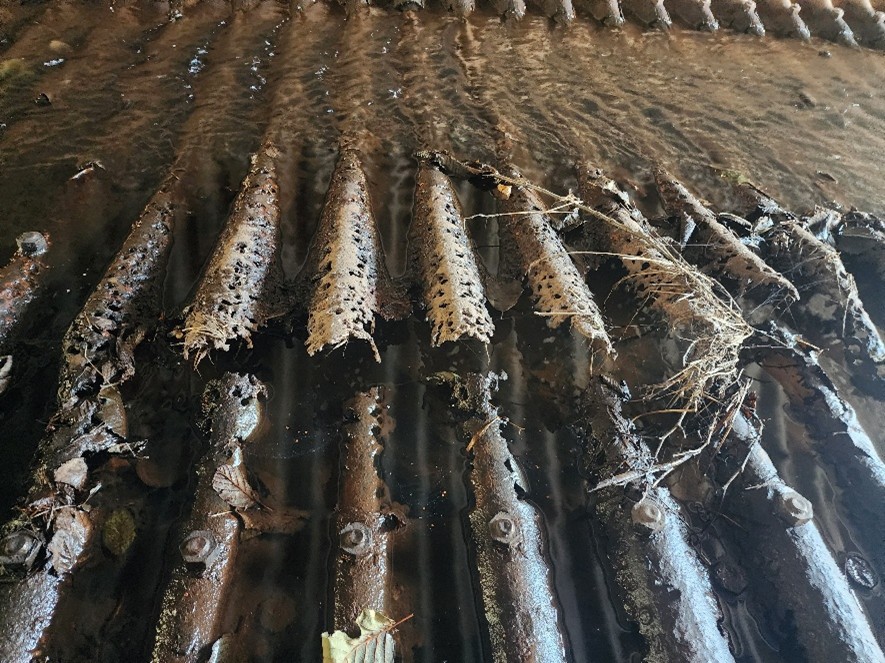
If the perched culvert is the usual round, metal cylinder, sand and gravel eventually abrade the floor of the culvert, leading to premature failure due to accelerated rusting. Large rains will cause the water to rise upstream of the culvert, eventually overtopping the road and washing away the culvert. During failure, sand and gravel from the road crossing washes downstream, leaving sediment deltas in the downstream floodplain and discharging sediment into the stream. This can happen multiple times if the new culvert is not designed properly for the size and flow of the stream.
The ecological effects of perched and failing culverts are many. Fish and mussels need to move upstream and downstream over their life cycles. Many mussel species spend their earliest life stage (glochidia) attached to the gills of certain fish species. Some are specialists on a single fish species. When perched culverts prevent fish passage, the fish can't access their spawning grounds and mussels disappear as well. Floodplain trees, other plants, and amphibians do not do well when their habitat is buried in gravel.
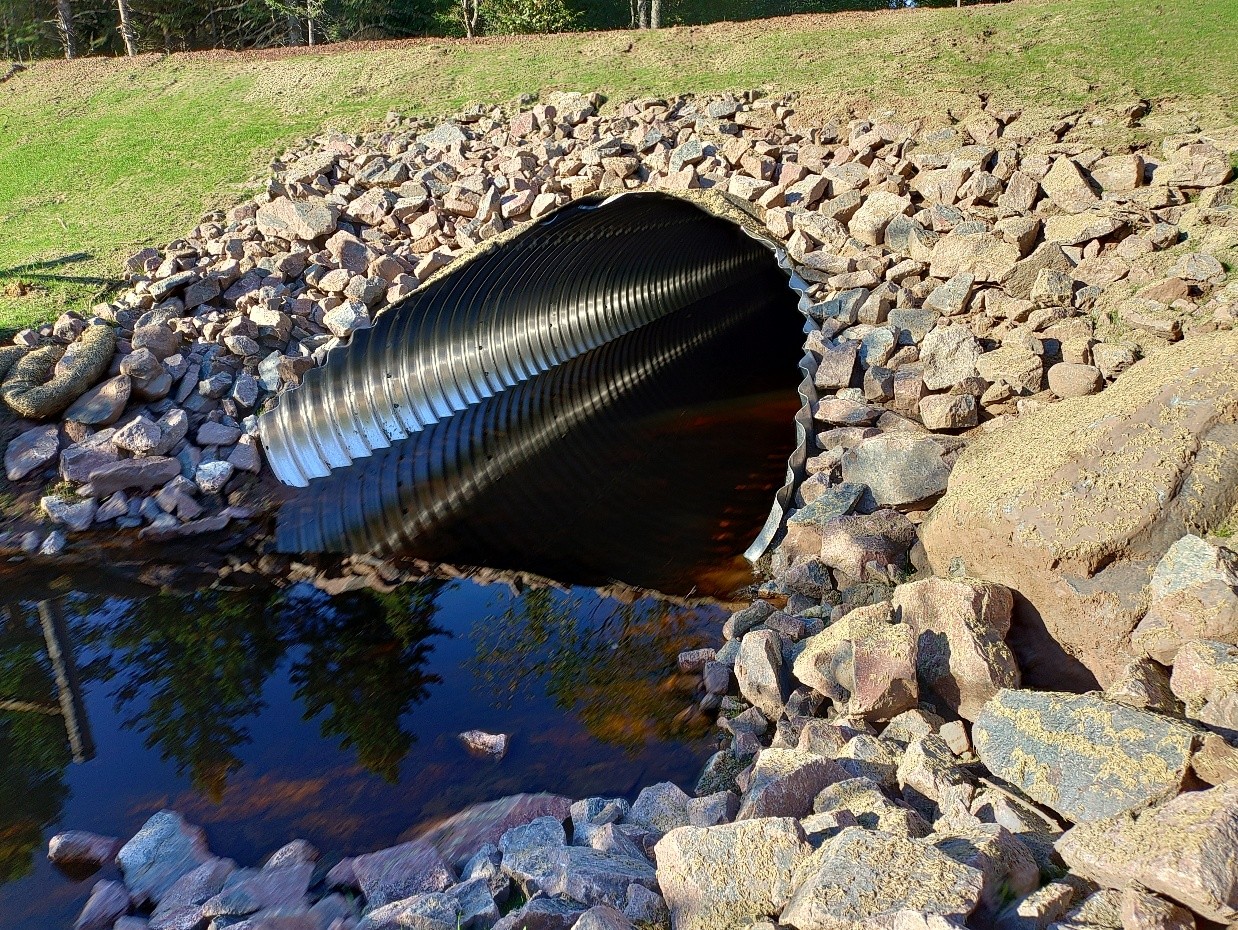
A properly designed culvert is large enough to accommodate the natural size and alignment of the stream channel and set low enough to allow aquatic organism passage. In a properly designed culvert, the floor of the culvert fills with sand and gravel, protecting the culvert from constant abrasion. These culverts are also designed to be large enough to allow debris like tree limbs to pass through rather than building up on the upstream side of the road.
Happy Creek, Ashland County
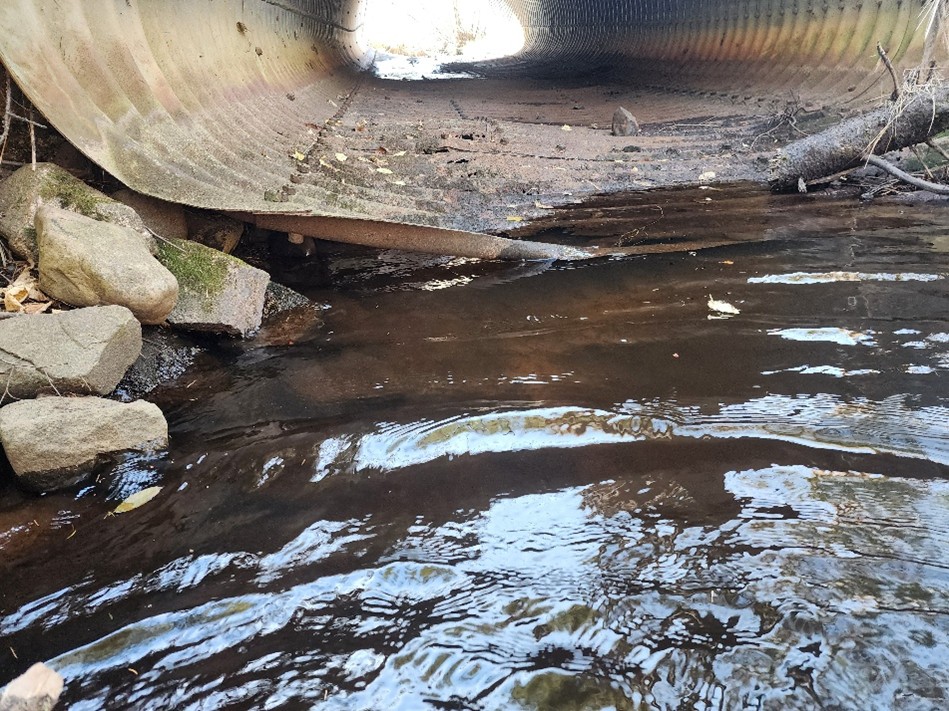
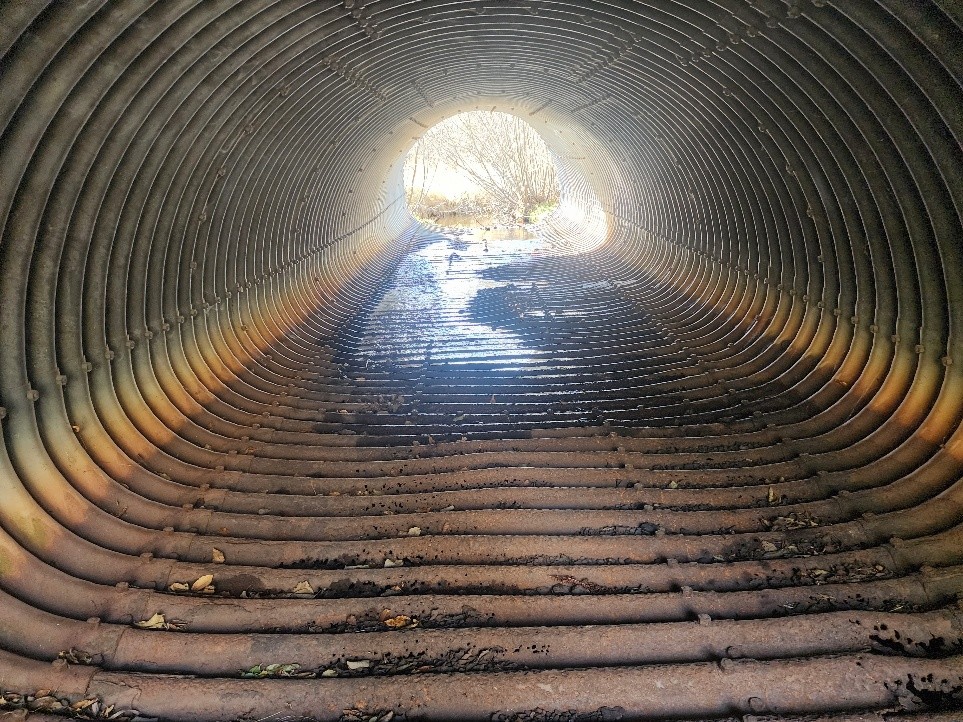
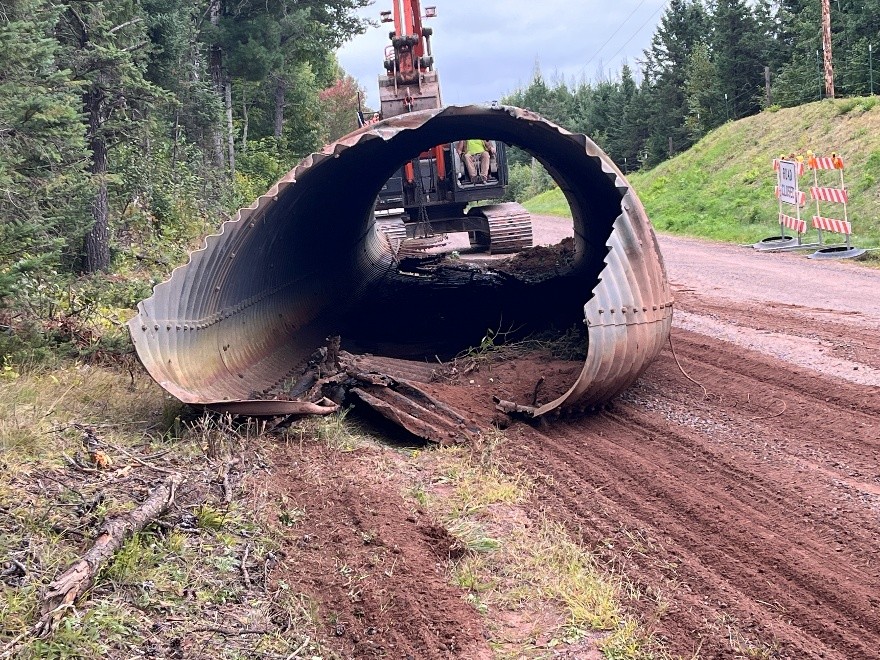
The existing steel pipe arch culvert at Happy Creek was exhibiting severe deterioration from corrosion due to constant abrasion. Most of the stream flow drained through holes in the culvert floor rather than flowing through the culvert. Photos by Chris Ester.
What Can Be Done?
The solution is to identify the culverts at highest risk of failure and replace them with properly designed culverts. Design methods like the Forest Service's Stream Simulation Design meet the goals of providing long lasting, low maintenance, flood resilient, and environmentally beneficial crossings. Wisconsin-specific resources for practitioners, published in 2025, provide technical guidance for how to conduct Stream Simulation Design: Flood Resilient Culvert Design Primer for Wisconsin and Flood Resilient Culvert Design Manual For Wisconsin.
"Properly-designed culverts are cost-effective over the long term," says Ester. "These culverts will last 75–100 years, require no maintenance, and survive floods. For example, let's say we replaced all 3,100 at-risk culverts within the Lake Superior watershed. Over the next 75 years, in-kind culvert replacements (without proper designs) would cost taxpayers roughly $273M, while culverts designed using Stream Simulation Design would cost taxpayers about $186M (in 2020 dollars). In-kind replacements need to be replaced more often and require frequent maintenance. These issues lead to higher costs over the long term."
"The two main challenges to increasing the pace and scale of Stream Simulation-designed culvert replacements are 1) lack of staff with the training needed to design the culvert replacements and 2) the higher initial construction cost required by properly designed culverts," says Ester. "To replace the average stream culvert in-kind (no design) costs taxpayers about $21,000 while a Stream Simulation culvert replacement costs about $60,000. This difference in up-front costs often leads local governments to prioritize short-term savings and install an in-kind replacement. And, when a culvert fails unexpectedly there is usually no time to do a design."
"There aren't nearly enough hydrologists and engineers with the expertise to design the number of culverts that need replacing," says Ester. "To partially address the lack of engineers, the Wisconsin State Department of Agriculture, Trade, and Consumer Protection hires about six engineers across the state to provide technical assistance to county land and water departments; this includes culvert design. But the workload is high enough to keep one engineer busy with culvert design per county. There is also training available for natural resources professionals and engineers who are interested in implementing Stream Simulation-designed culverts. These training courses are hosted by a Road Stream Crossing Collaborative.1 But even with these resources and growth opportunities, a significant gap exists between the demand for this expertise and the available supply."
A Pitch Leads to a Home Run
One solution to limited resources is collaboration. The Lake Superior Collaborative excels at collaboration and a project entitled Priority Headwaters to Coast Stream Crossing Replacements and Enhancements in Ashland County Lake Superior Basin is a great example.
"Usually culvert projects are funded individually," says Ester. "But for this project, we (U.S. Forest Service) worked with Ashland County's Land and Water Department and Highway Department to identify needed culvert replacements that had a direct community benefit, ecological benefits (especially for brook trout), and were located on and off National Forest land. Two of the four culverts we selected were in National Forests. The Forest Service did the culvert replacement design work for all four culverts. Ashland County Land and Water handled proposal writing and grant application, and the Highway Department did the on-the-ground construction. Even though our engineers are busy, we (Forest Service) had enough capacity to design the two culverts that were off National Forest lands. It was a win-win for everyone!"
The Collaborative's Pitch Party process is testing a new method for bringing partners together to collaborate. Early project ideas are 'pitched' to small teams of conservation partners and/or funding agencies, often long before grant opportunities are released. Peers and funders provide rapid feedback to make the project better or more collaborative. This four-culvert replacement project resulted from a pitch by Ester and MaryJo Gingras, Ashland County Conservationist.
"Working together, sharing expertise and resources, and applying for grants are unique ways to implement projects with many benefits," says Gingras. "These projects are often essential for public safety, fish and wildlife habitat, natural resource protection, and improvement of our communities. We can get more work done by working creatively together than we can by working alone!"
"We were excited to help Ashland County and the U.S. Forest Service bring their resources together to address four priority culvert projects," says Mitch Baalman, U.S. Fish and Wildlife Service biologist with Refuges. "Headwaters to Coast funding from the EPA's Great Lakes Restoration Initiative helped pay for materials and highway department staff time, while the Forest Service provided technical designs for the culvert replacements."
Happy Creek
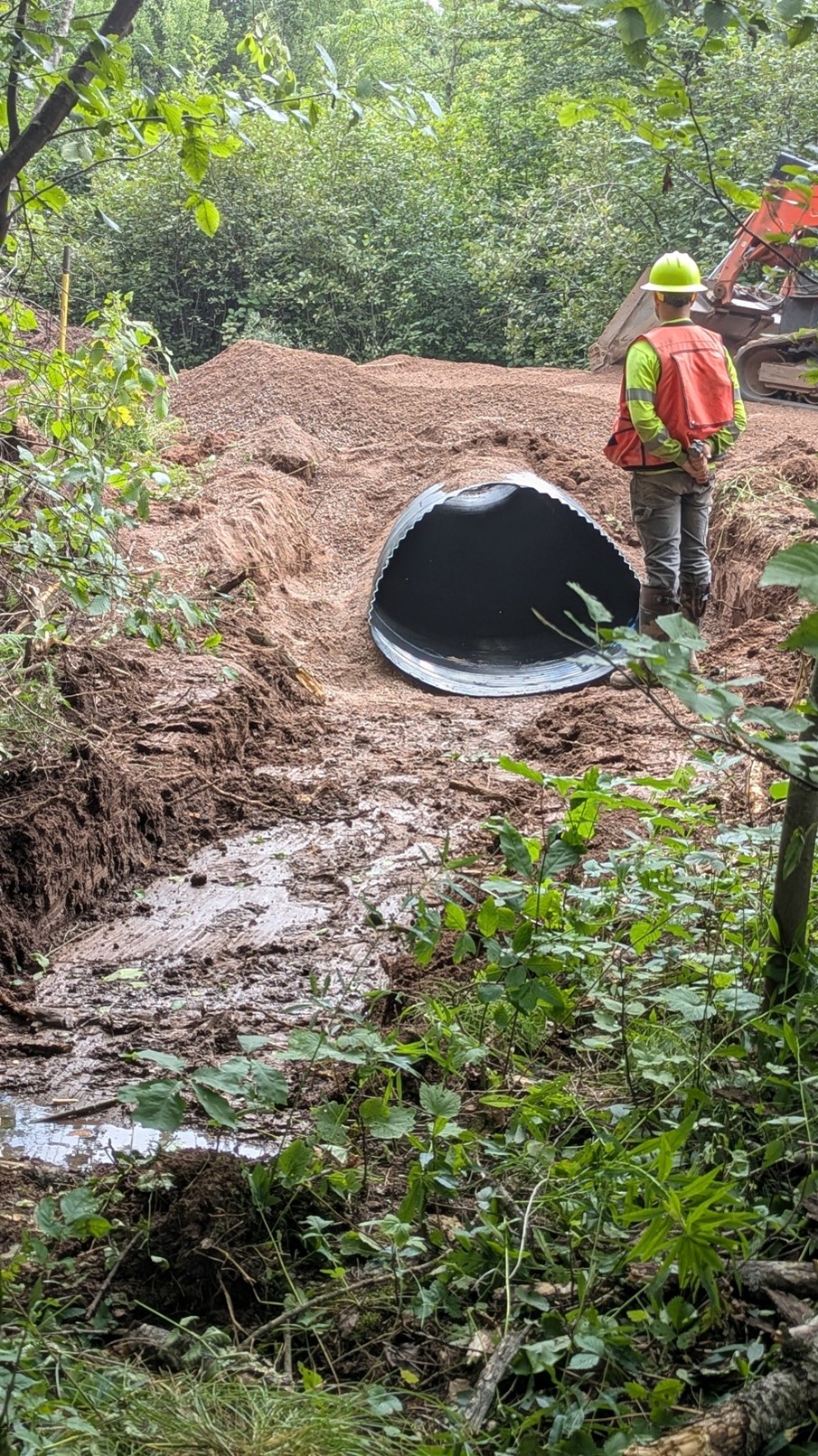
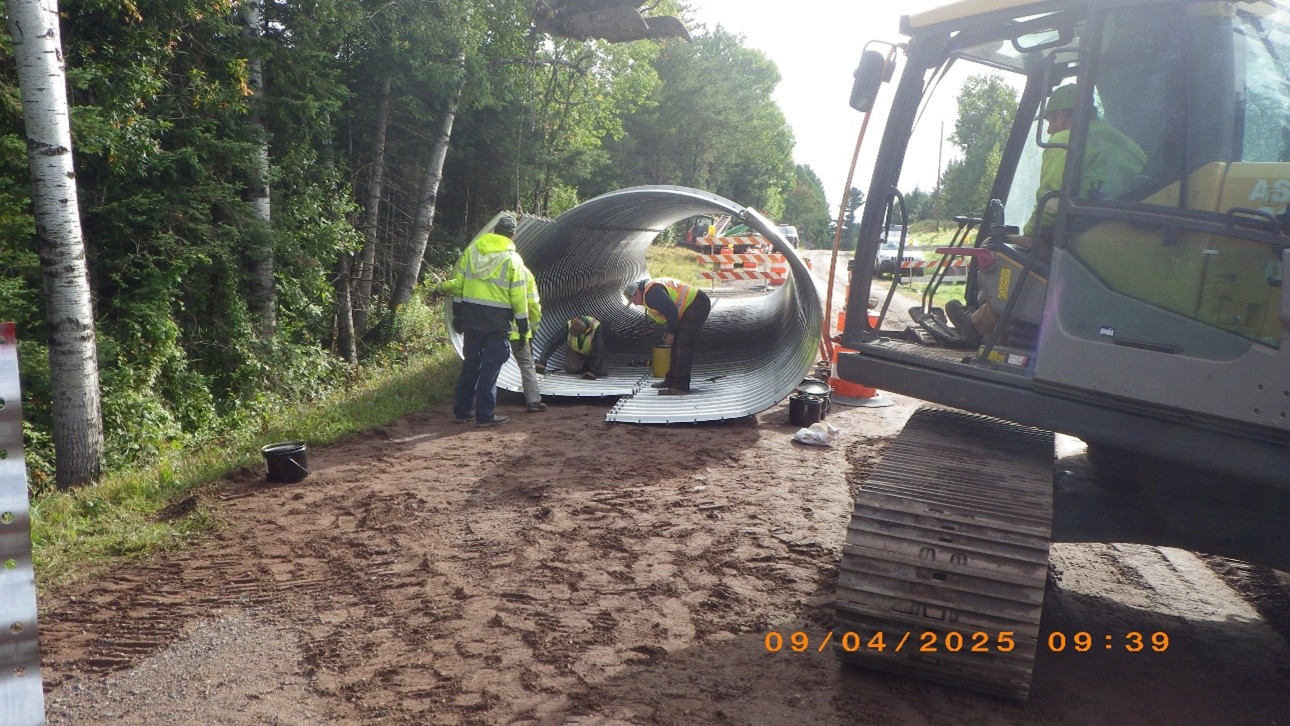
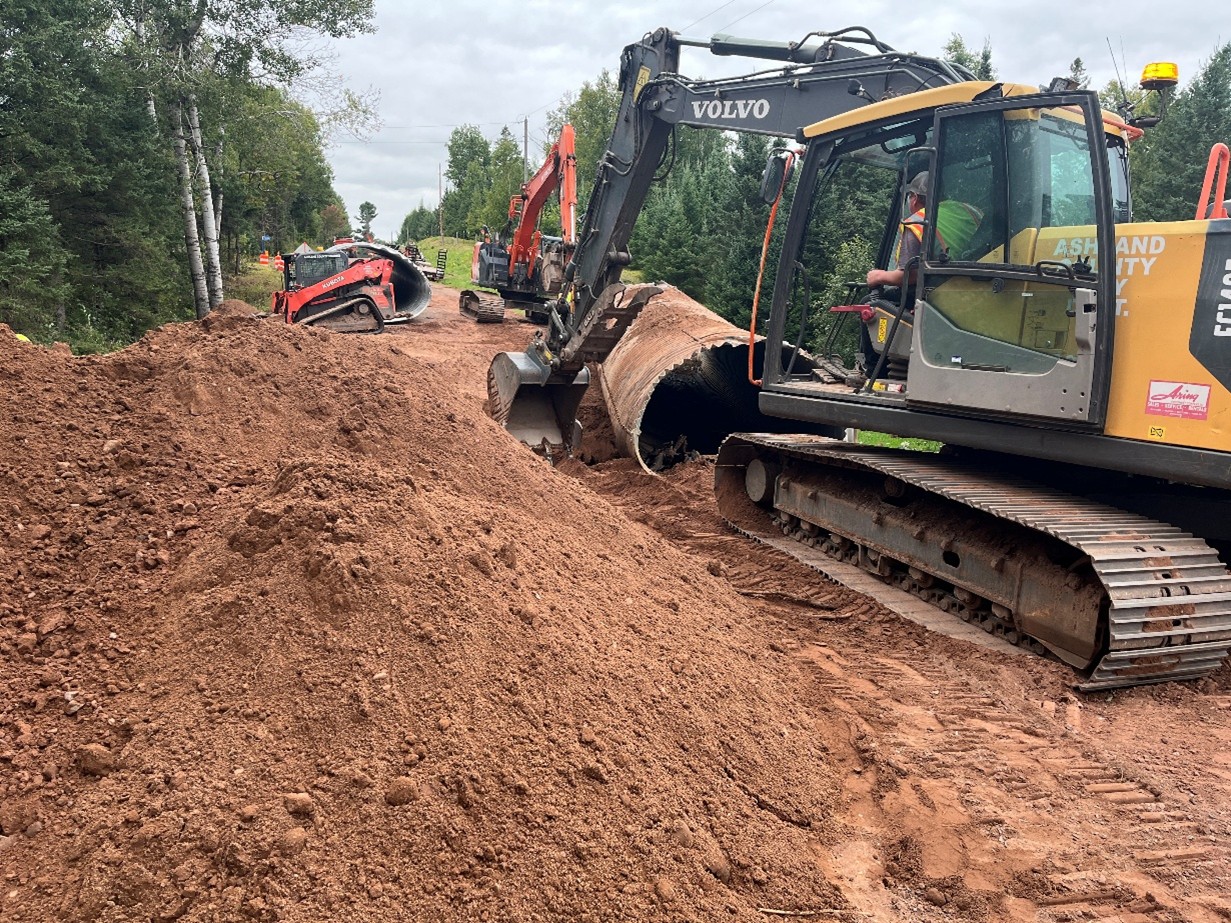
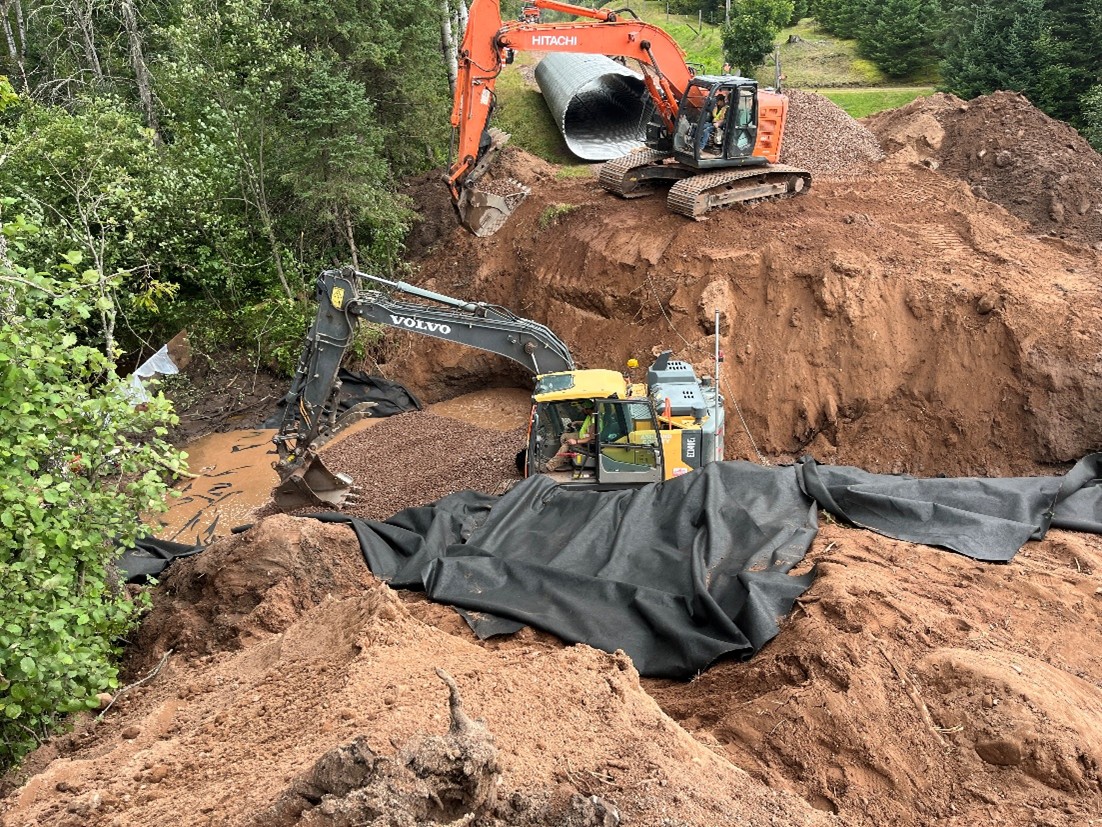
Ashland County Highway Department staff and equipment during construction at Happy Creek. Photos by Chris Ester.
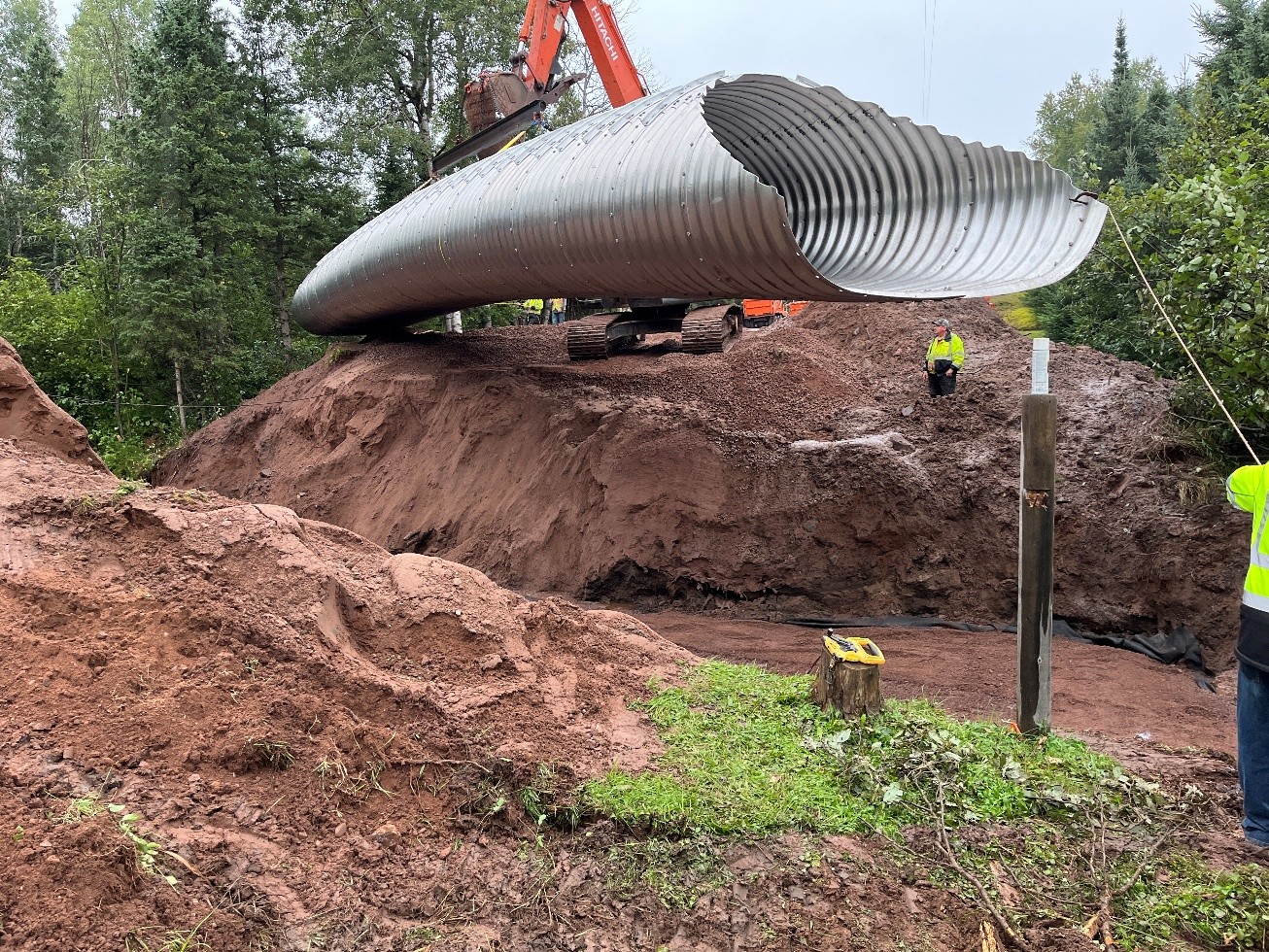
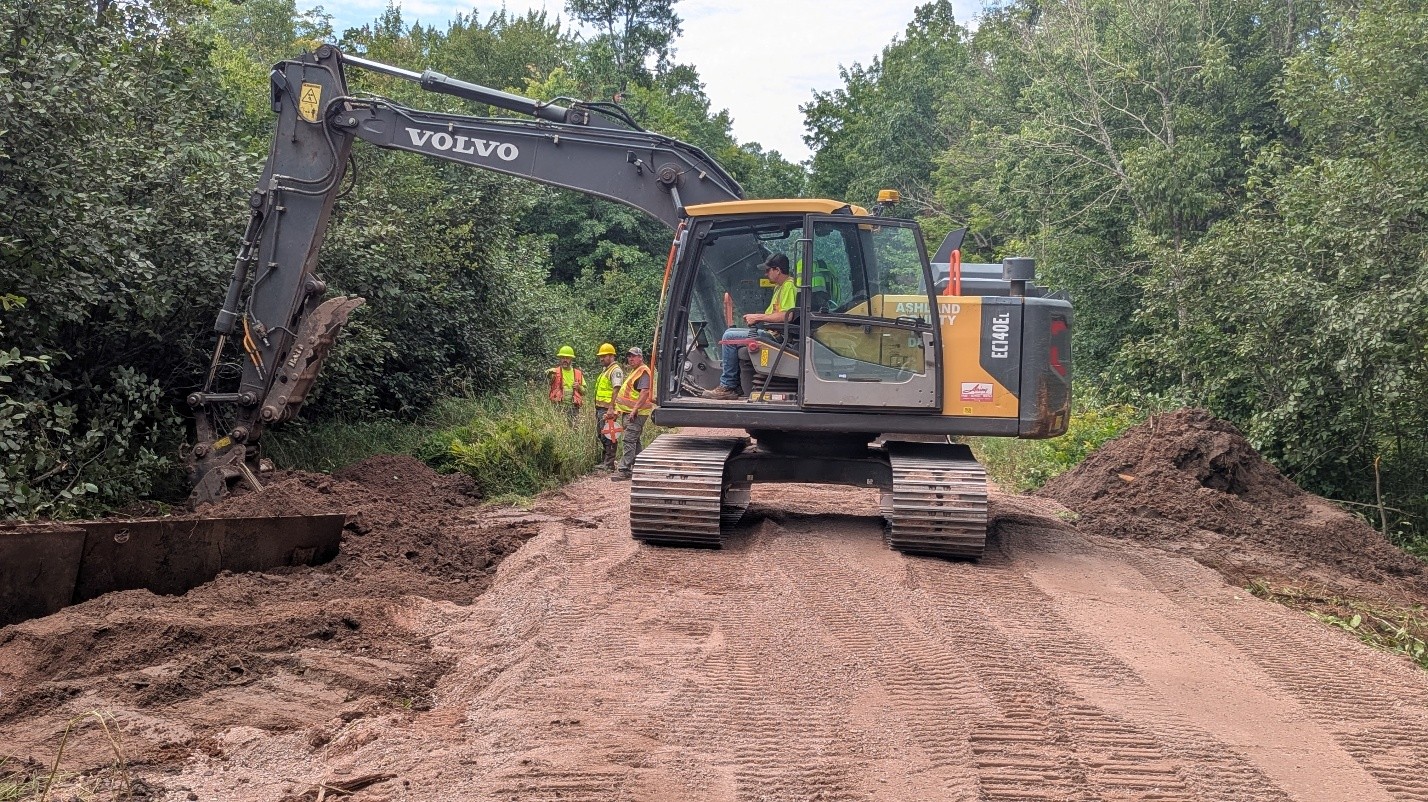
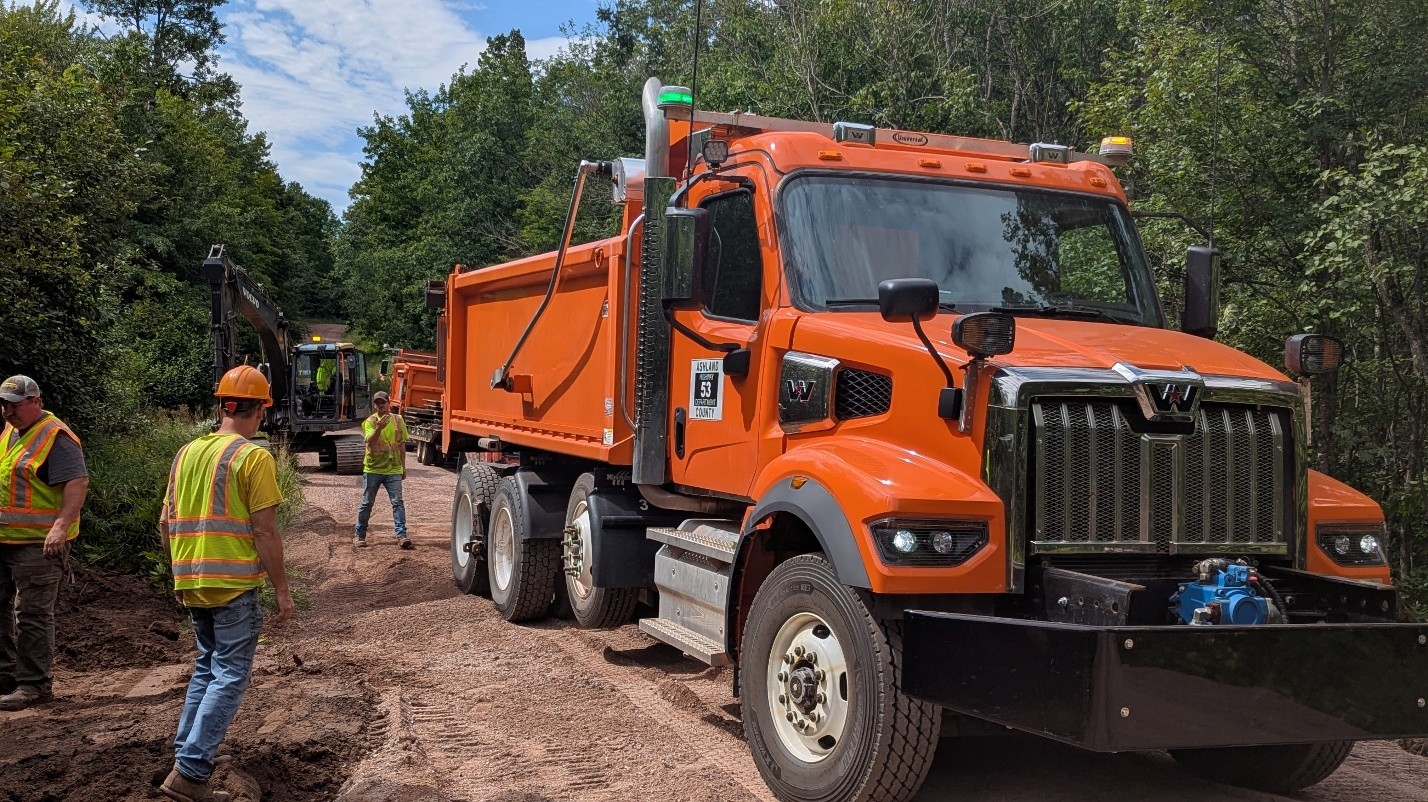
"In 2025 we replaced two of the culverts in Ashland County and two more are scheduled for 2026," says Ester. "We're happy that the collaboration worked so well. We estimate that, by removing the four fish passage barriers, fish and other aquatic organisms will have access to about 13 additional miles of stream and 3.2 acres of wetlands will be restored, enhanced, or protected due to this one project."
"I would certainly do it (the pitch party) again," says Ester. "In fact, I'm working with Bayfield County right now on a similar collaboration to replace seven culverts in 2027. They have many culverts at risk of failure too, and, four of the seven in the proposal are on National Forest land."
"Partnerships between various departments, agencies, non-profits, townships, and landowners offer the opportunity to complete important work while providing technical and financial resources that may not otherwise be available to a landowner," says Gingras.
For Ester, Baalman, and Gingras, the rewards of the job are knowing that they've helped improve the ecology of small streams, as well as making roads safe for people to enjoy the beautiful north woods of Wisconsin, one stream crossing (culvert) at a time.
Stream Simulation Designed Culvert
The completed Stream Simulation designed culvert at Happy Creek. Photos by Chris Ester.
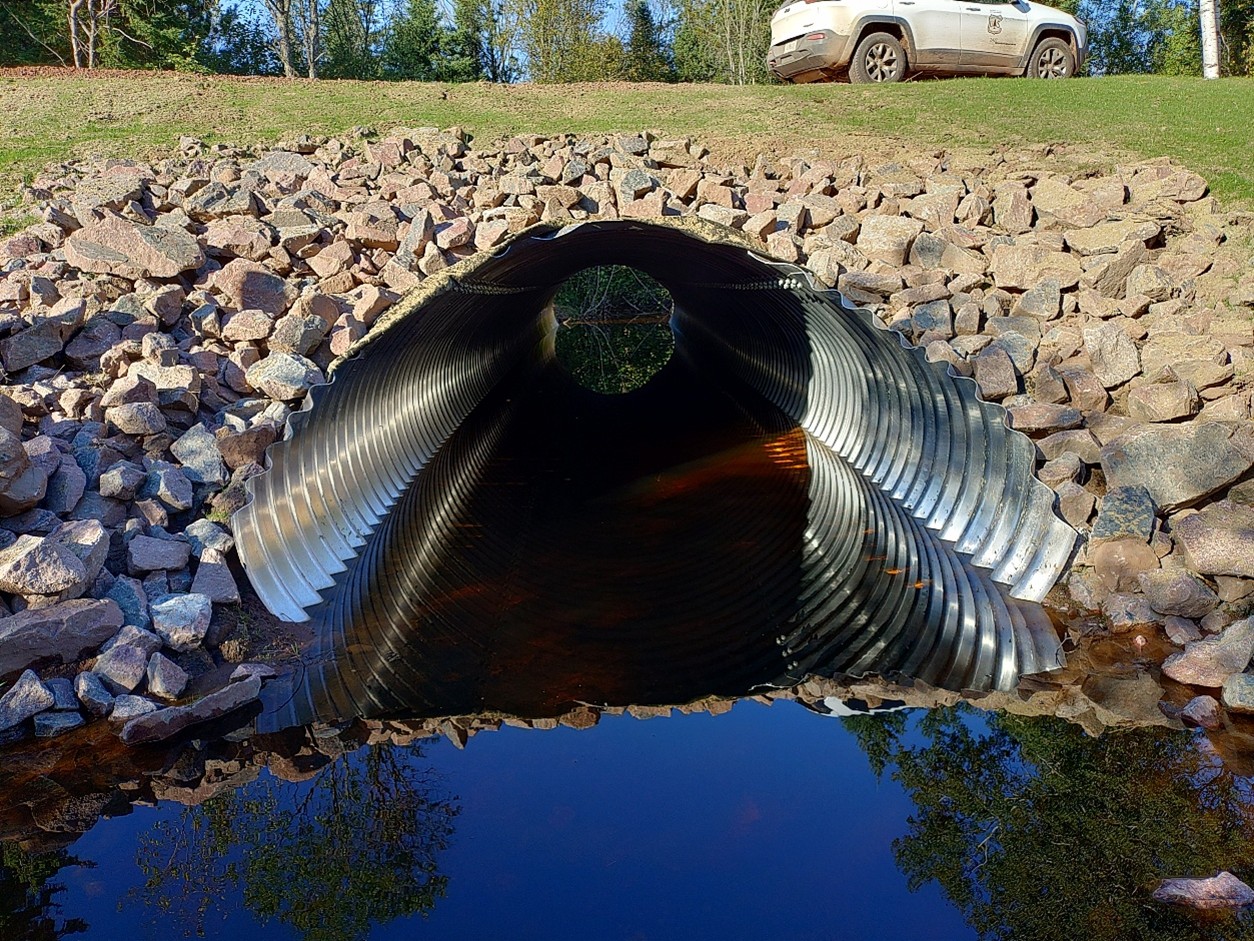
Nearly finished culvert at a small headwater stream tributary to Silver Creek at Forest Road 390, Kornstead Road, near Mellen, WI. Forest Service staff observe construction by Ashland County Highway Department. Photo by Mitch Baalman.
1 The Road Stream Crossing Collaborative offers training courses for natural resources professionals and engineers interested in implementing Stream Simulation-designed culverts.