
Light the Torch: Saving the Northwest Sands Ecosystem, One Patch at a Time
What is the Northwest Sands Ecosystem?
The sandy landscape of northwestern Wisconsin (NW Sands) supports a fire-adapted ecosystem referred to as pine or oak barrens, a mosaic of open grasslands, ericaceous shrubs, and widely spaced, fire adapted tree species like jack pine, red pine, and oaks. For native Americans, these lands are highly valued because they sustain Anishinaabe lifeways. The gathering of sharp-tailed grouse (Aagask), wild turkey (Mizise), blueberries (Miin), sweet fern, and other medicines is culturally meaningful and life-sustaining. But this xeric landscape was a disappointment to early Wisconsin settlers looking for productive farmland and, today, is still a mystery revealing its secrets.
A healthy pine/oak barren landscape supports both common and uncommon species such as white-tailed deer, wild turkey, black bear, badger, wolf, fox, sharp-tailed grouse, upland sandpiper, nighthawk, short-eared owl, and northern harrier. Uncommon butterfly and moth species are also present, and many require specific host plants. During the nesting season the barrens' open landscape provides critical nesting and brood rearing for breeding birds, including waterfowl adjacent to wetlands. Plant species diversity is especially high, reaching 250 or more species at some sites. The open barrens with widely-spaced trees support a healthy and diverse understory of grasses, herbs, and shrubs.
The Wisconsin Department of Natural Resources (DNR) website states that:
The Northwest Sands is the best place in Wisconsin and, arguably, the planet to manage for the globally rare pine barrens community. Large-scale barrens management is possible here because of the ecological suitability of the land, the presence of numerous remnants and substantial public ownership. There are opportunities to connect existing barrens remnants and restoration projects with corridors and manage them with a mosaic of compatible vegetation types.
The Challenge
Successive land use changes since the 1850s have degraded the NW Sands landscape. Once covering an estimated 930,000 hectares, today only an estimated 1% of the original pine barrens remains; pine barrens are imperiled in Wisconsin and rare globally. In Wisconsin, intense fire suppression began around 1850–1860, followed by farming. By the 1930s, the land was worn out and farming was not profitable on the nutrient-poor soils. The nation-wide economic depression was the last straw for many landowners who could not pay their taxes. Lands were abandoned and ownership reverted to counties. In the 1930s the Civilian Conservation Corps (CCC) worked to reforest the natural pine barrens as pine plantations, which led to industrial forestry, still a dominant land use today. Natural forests or barrens in which red or jack pine are dominant, amidst grasses and shrubs, are now very rare and widely-spaced, leading to a fragmented landscape where some rare plants and animals struggle to survive.
Conservation
Beginning in the 1940s, decreasing populations of sharp-tailed grouse stimulated concern over loss of the pine barrens as a unique ecosystem. Sharp-tailed grouse are highly desired by hunters for food and sport and are very dependent upon a healthy barrens landscape. In response, barrens restoration areas were established by the Wisconsin DNR from 1948–1978 with the goal of restoring sharp-tailed grouse habitat. Over time, public conservation concerns broadened to include the diverse assemblage of plants and animals associated with these rare habitats. The goal of numerous conservation organizations now working in Northwest Wisconsin is to restore the barrens ecosystem on public land and assist private landowners to consider compatible conservation practices on their land.
Science and traditional ecological knowledge are on the same page about what is needed. Barrens caretaking maintains landscapes that have long sustained Anishinaabe lifeways. Traditional ecological knowledge supports increased connectivity of barrens habitat to support Aagask (sharp-tailed grouse) populations that are identified as being very vulnerable to climate change. Native people also want to revitalize the use of Ishkode (fire) in caretaking of barrens habitat.
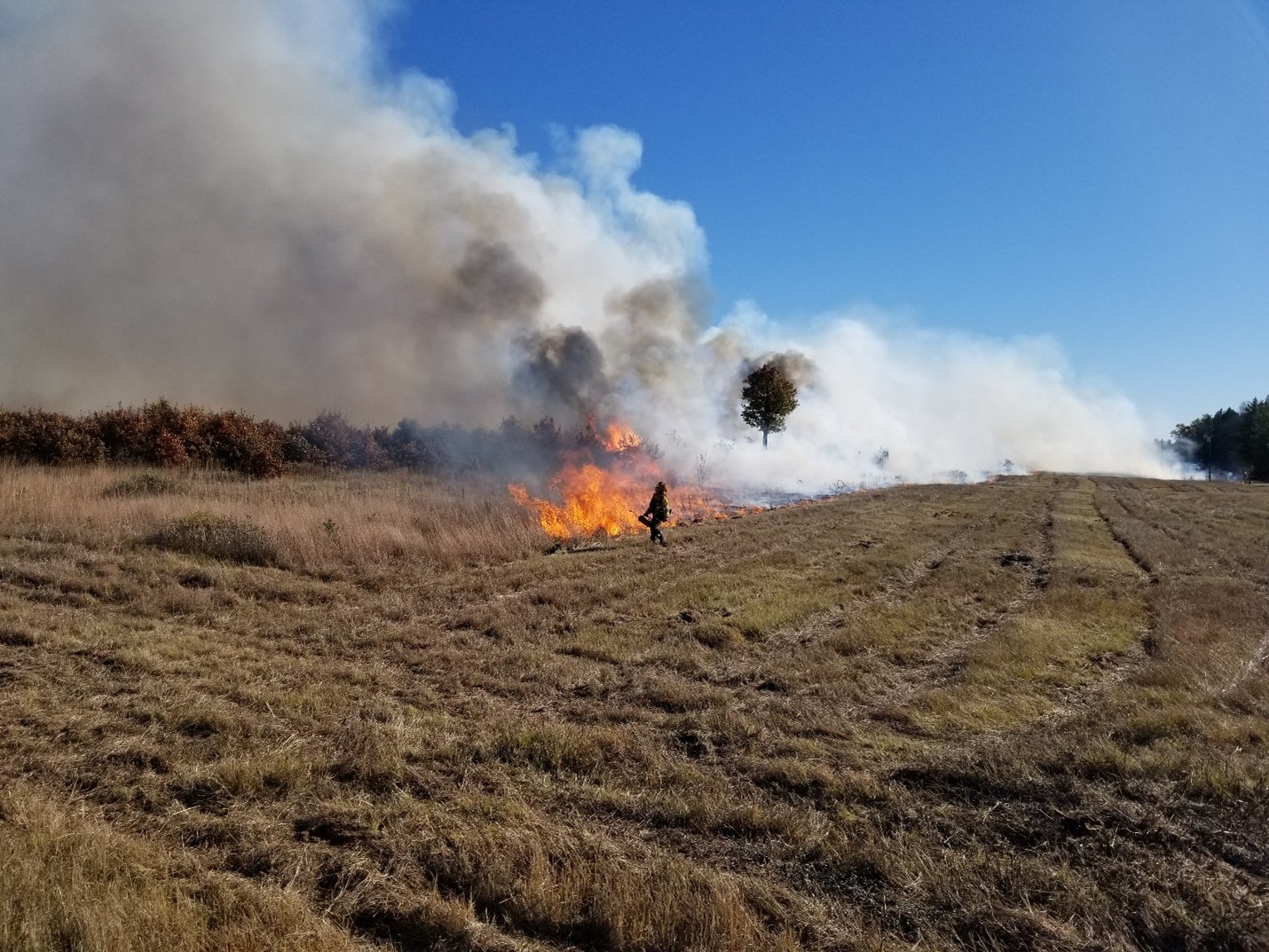
The lack of fire is the main obstacle to restoring biodiversity in the pine barrens. Putting fire back on the landscape is nature's process for stewardship of barrens and open wetlands. Prescribed burns and other habitat work are critical to maintain the quality and quantity of habitat for many species that rely on the pine/oak barrens landscape. Other commonly employed restoration methods include timber removal, mowing, and/or fire break establishment.
The term 'rolling barrens' refers to the use of timber harvest to create barrens openings that mimic the effects of a large natural fire. After about 12 years, these open areas succeed to young forest, followed by mature jack pine forest; then they are harvested again. As some areas regenerate to forest, other areas are harvested, creating an ever-changing mosaic of forest and open barrens habitats that 'roll' around the landscape. Rolling barrens also provide multiple age classes of pine barrens critical for the rare Kirtland's and Connecticut warblers, and common species such as wild turkey, snowshoe hare, and bobcat.
"The rolling barrens concept allows us to return some economic benefit to private timber companies and counties while still providing high quality barrens habitat for sharp-tailed grouse and other species." — Bob Hanson, Northwest Sands Wildlife Biologist, Wisconsin DNR
It's not easy! Public land priorities make it difficult to recreate the shifting mosaic of barrens, savannas, grasslands, and brush prairies across the diverse landscape that once existed. Deploying fire in a landscape dotted with rural homes and small towns is a challenge. It is also a challenge to balance the needs of high priority species that depend on fire with those that can be harmed by fire. The complexities of restoration provide a continuing challenge for managers to sharpen their toolbox. This includes testing various combinations of cutting, mowing, and burning at different spatial scales to support the rare and diverse species dependent on the barrens. Monitoring plants, sharp-tailed grouse, small mammals, other birds, amphibians, and reptiles is also necessary to understand the effectiveness of various management tools; but monitoring is expensive.
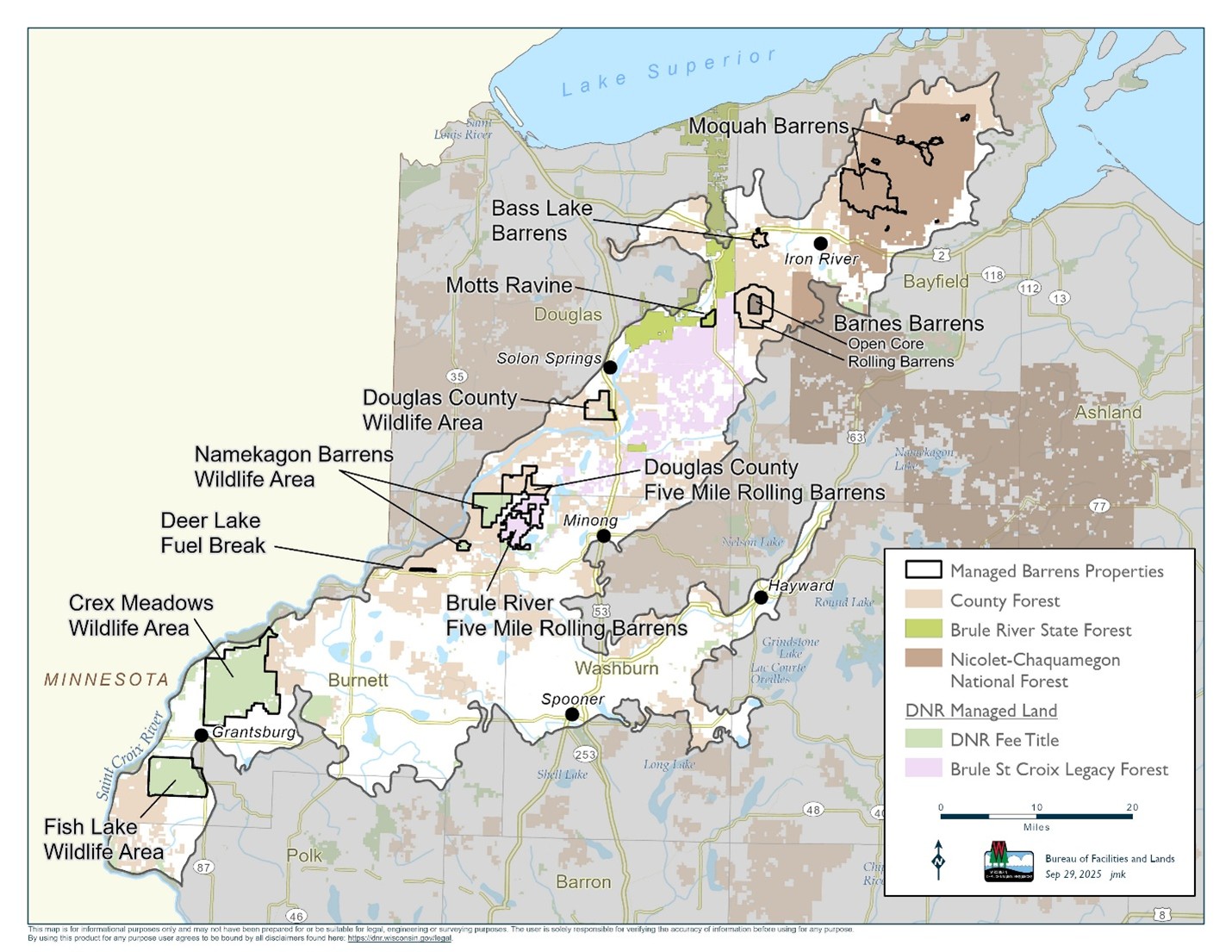
Map of managed barrens properties across northwestern Wisconsin, 2025.
Accomplishments
The Northwest Sands is a 1.2-million-acre landscape. Historically it is estimated that about 50% to 70% of the area was occupied by open barrens, roughly 600,000 to 800,000 acres. We are getting close to 50,000 acres restored. So, we're making progress, and we acknowledge that the historical composition is not a realistic restoration target, given current land uses and ownerships. Instead, we're focusing on restoring high quality habitat where we can and improving landscape connectivity to facilitate movement of plants and animals among habitat patches.
This is a summary of prescribed burns accomplished recently:
- Moquah Barrens (USFS): 2024 – 2,131 acres; 2025 – 503 acres
- Bass Lake Barrens (Bayfield County Forest): FY24 – 594 acres
- Barnes Barrens (Bayfield County Forest): FY25 – 687 acres
- Mott's Ravine (Brule River State Forest): 2024 – 235 acres
- Douglas County Wildlife Area (DNR Wildlife): 2024/25 – 1,470 acres
Many other burns were completed further south in the St Croix Watershed at Namekagon Barrens and Crex Meadows Wildlife Areas. Private lands work, especially in the Oulu Grasslands, are also contributing to successes. These accomplishments are directly tied to strong and effective partnerships among numerous organizations, including the Wisconsin DNR, the Lake Superior Collaborative, Sharp-tailed Grouse and Ruffed Grouse Societies, American Bird Conservancy, Audubon, The Nature Conservancy, Bayfield and Douglas County Forestry, the U.S. Forest Service, and, in some places, private timber companies.
Is It Working?
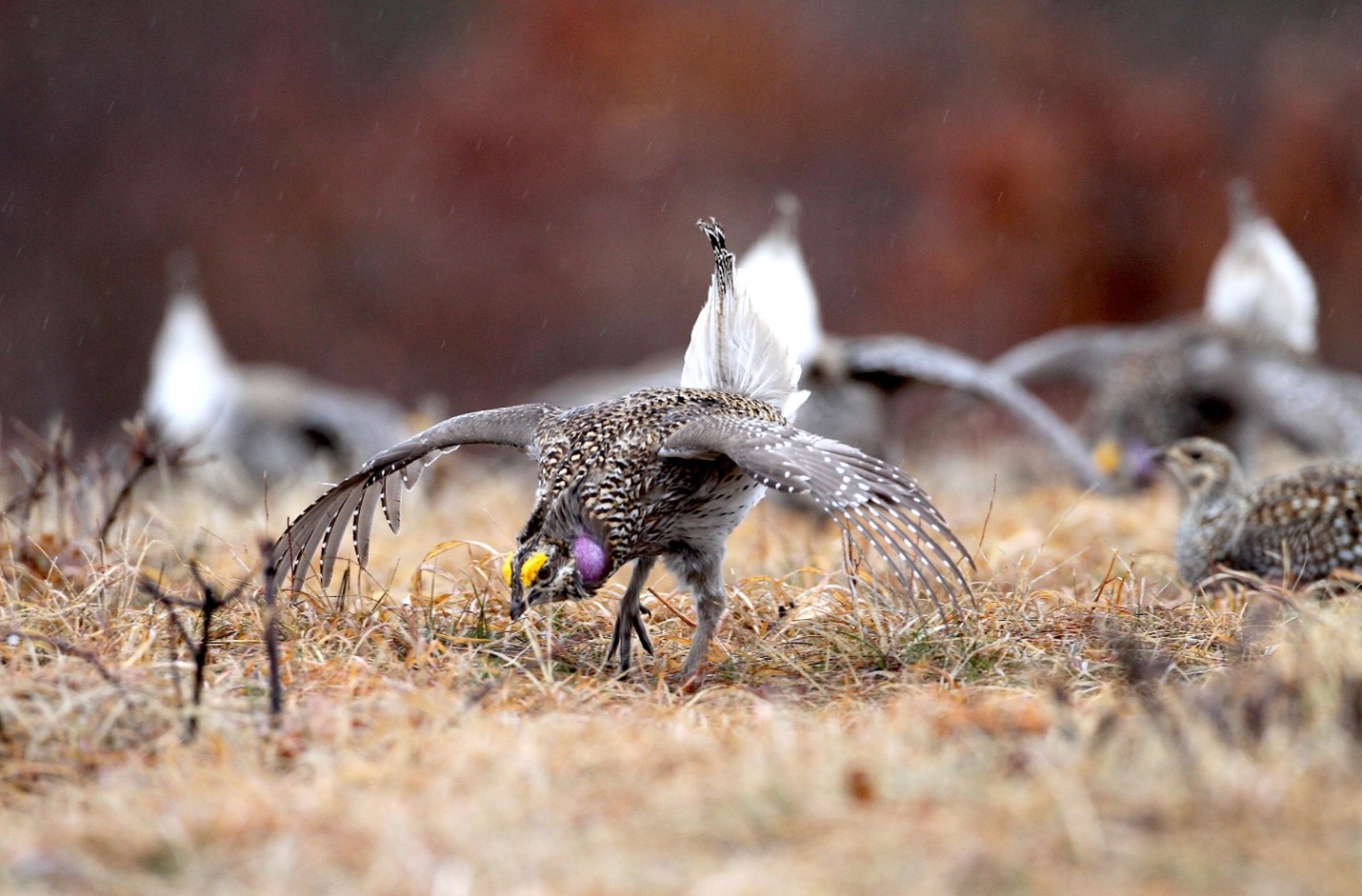
Sharp-tailed grouse courtship display on restored barrens habitat.
Restored rolling barrens provide high quality habitats within the first growing season and may host more than 100 plant species. Fully established restorations have even more species. Recent plant surveys at publicly-owned barrens sites revealed overall high native plant species richness, ranging from 140–262 species per site.
For example, Barnes Barrens in Bayfield County demonstrates how successful these restorations are. "This is a collaboration among Bayfield County Forestry and the Wisconsin DNR — Forestry, Wildlife, and Natural Heritage Programs," Hanson explains. "Our botanist reports a high diversity of native plant species just one year post restoration; sharp-tailed grouse populations have rebounded, along with badger, deer and turkeys. Common nighthawks love the open areas for hunting. Moth and butterfly surveys logged a new record for the county."
Sharp-tailed grouse populations are a strong indicator and a public 'litmus test' for how effective barrens management is. In 2025, 275 male grouse were counted during NW Sands surveys, up from 132 males in 2021. The hunting community is excited about the DNR opening a limited sharp-tailed grouse hunting season in 2025, the first since 2018.
"The NW Sands partners work so well together because they are betting on a good horse. There are few other places where you can restore a fully functioning landscape relatively quickly with some simple tools. It's a good gamble; most projects are successful within 1–3 years." — Bob Hanson, Wisconsin DNR