Wisconsin Master Naturalist Training: Lake Superior 2026
Sixteen new naturalists join the statewide network after two weeks in the field across the Lake Superior Basin
For more than a decade, the Wisconsin Master Naturalist program has been building a network of trained volunteers who bring science, education, and stewardship back to their own communities. Last year alone, Master Naturalists across the state reported more than 90,000 volunteer hours and reached more than 640,000 people through educational programs, working in all 72 Wisconsin counties.
Behind every one of those numbers is a training just like the one hosted this August by the Superior Rivers Watershed Association and the Lake Superior Collaborative (LSC). For the first time, the two organizations partnered to offer a Wisconsin Master Naturalist training focused entirely on Wisconsin's Lake Superior region.
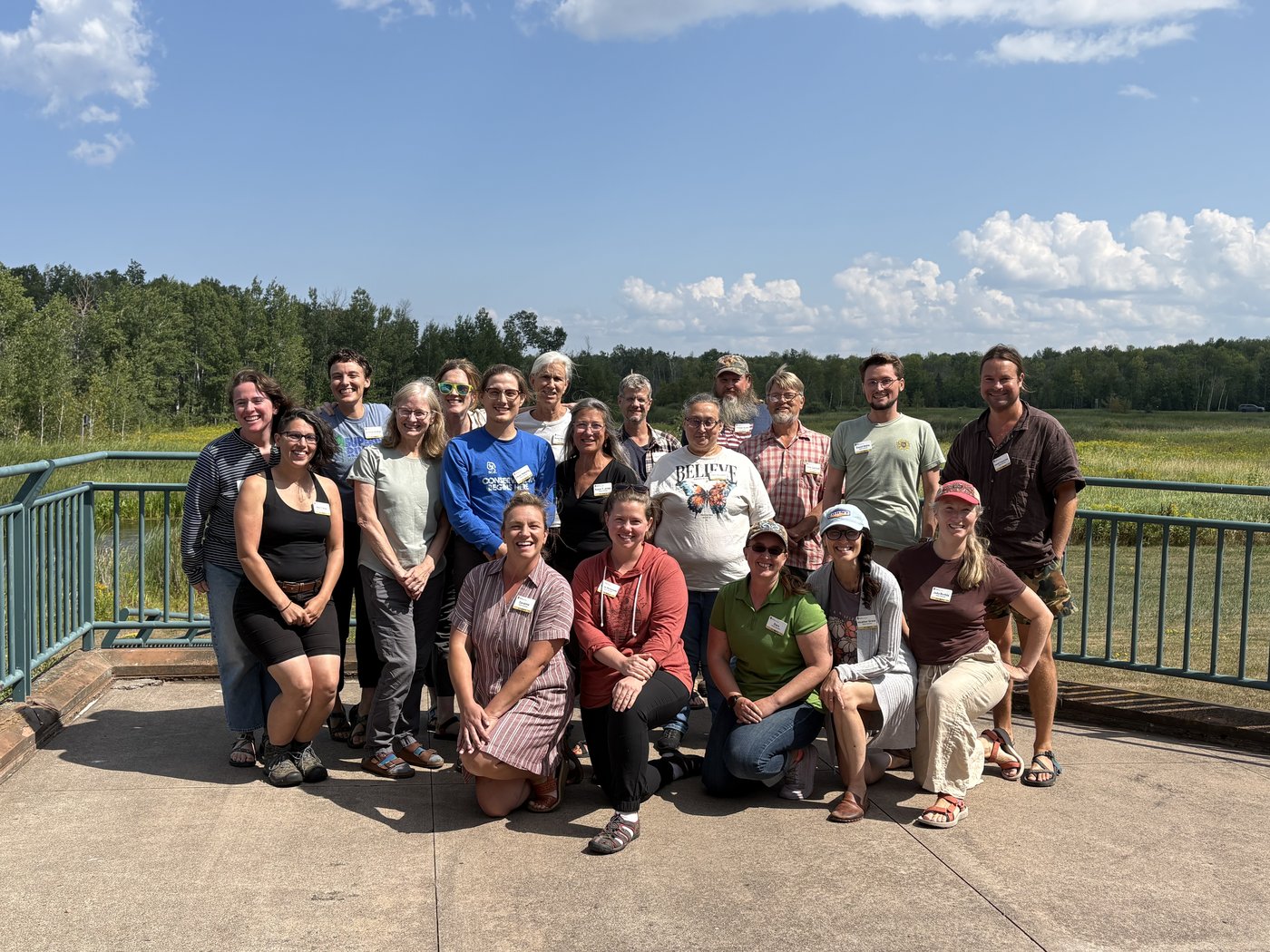
Over two weeks, 16 students joined the Wisconsin Master Naturalist network. The training included six full days of field experiences and featured 25 guest speakers, giving participants the opportunity to learn directly from scientists, natural resource professionals, educators, Tribal partners, and conservation practitioners working throughout the region.
The first day began at the Coastal Classroom at Whittlesey Creek National Wildlife Refuge, where participants were introduced to the Master Naturalist program and the places and members they would encounter throughout the training.
Mitch, Ellery, and Louise from the U.S. Fish and Wildlife Service joined the group to share the history and creation of Whittlesey Creek National Wildlife Refuge and discuss the importance of coaster brook trout. Participants also had the opportunity to see electroshocking in action as they learned about fish monitoring in Whittlesey Creek.
In the afternoon, the dynamic duo of Tom Fitz and Dave Ullman led a geology session and driving tour, taking participants through the story of how the Lake Superior Basin was formed, from its ancient geologic origins to the most recent chapter written by glaciers.
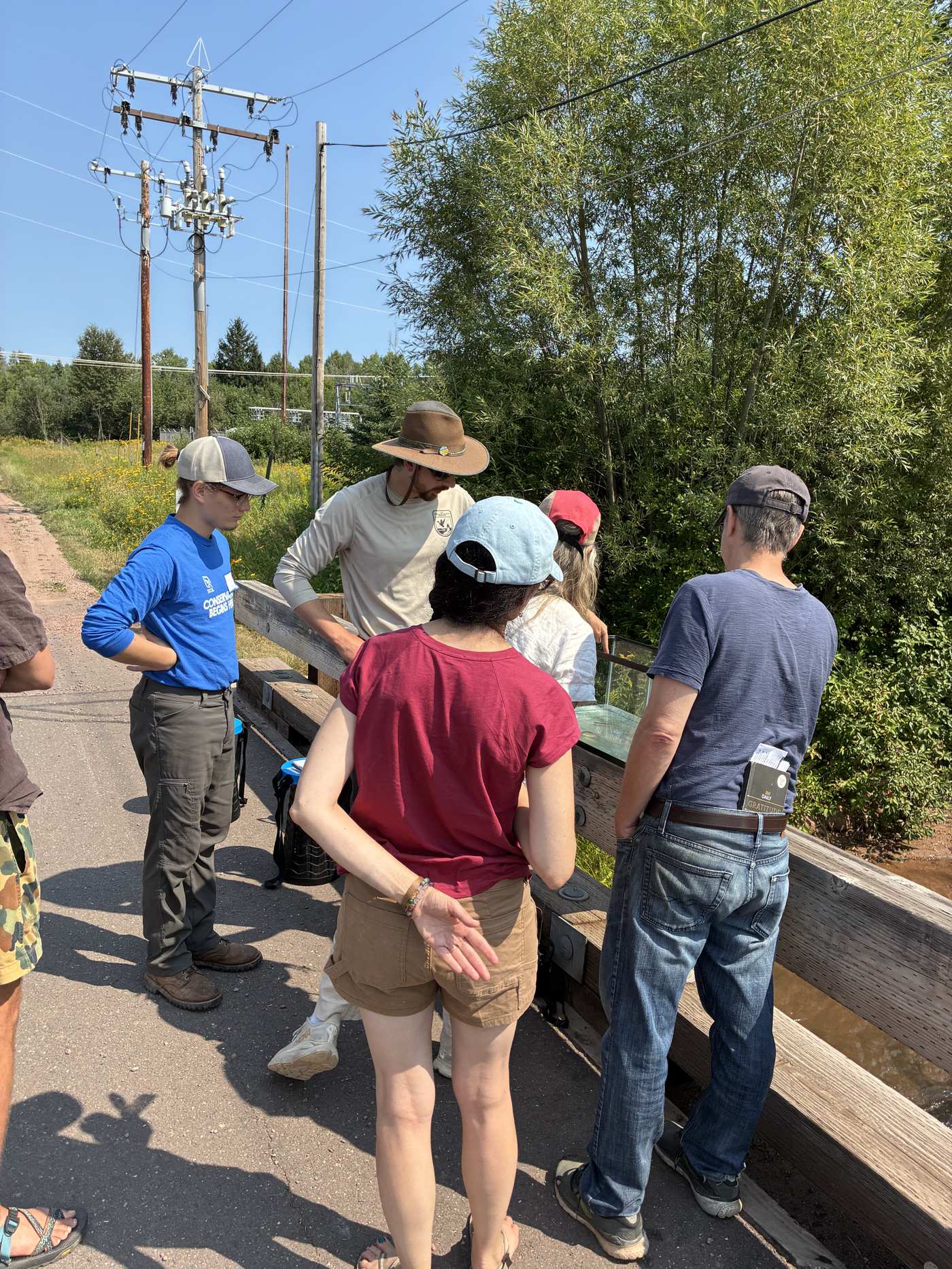
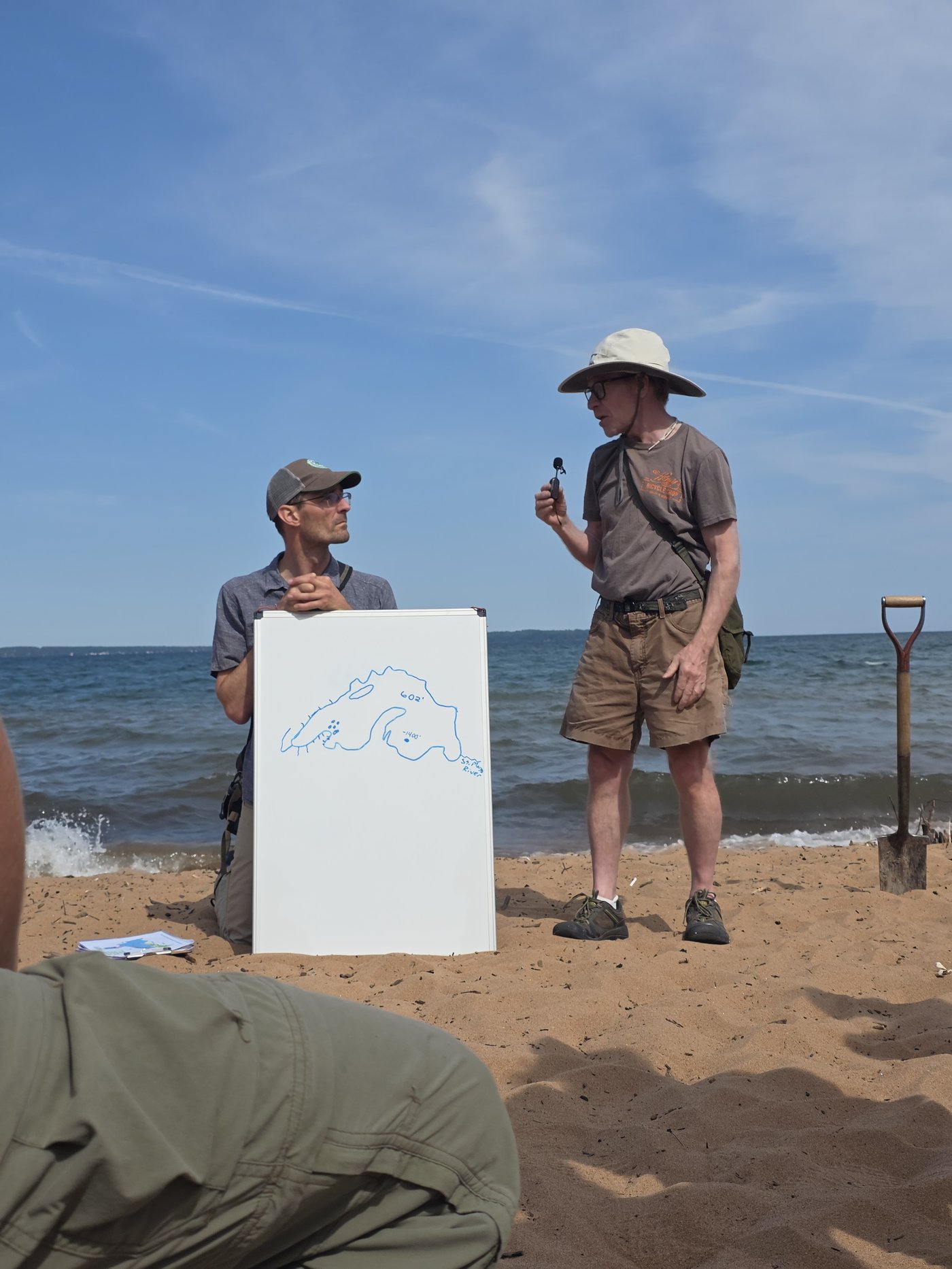
Watching an electroshocking demonstration on Whittlesey Creek, and sketching out the formation of the Lake Superior Basin during the geology driving tour.
Day two took the group to Beaver Hollow, where Peggy Burkman introduced participants to plant communities, ecology, and the role of disturbance in shaping ecosystems. Kathy Wendling then spoke about community stewardship and the role beavers play in the landscape.
From there, the group traveled to Frog Bay Tribal National Park. Jessica Jacobson shared the history of the park and the work that led to its creation before leading a "Professor Hike." The hike gave participants an opportunity to practice their own teaching and interpretation skills while out on the trail.
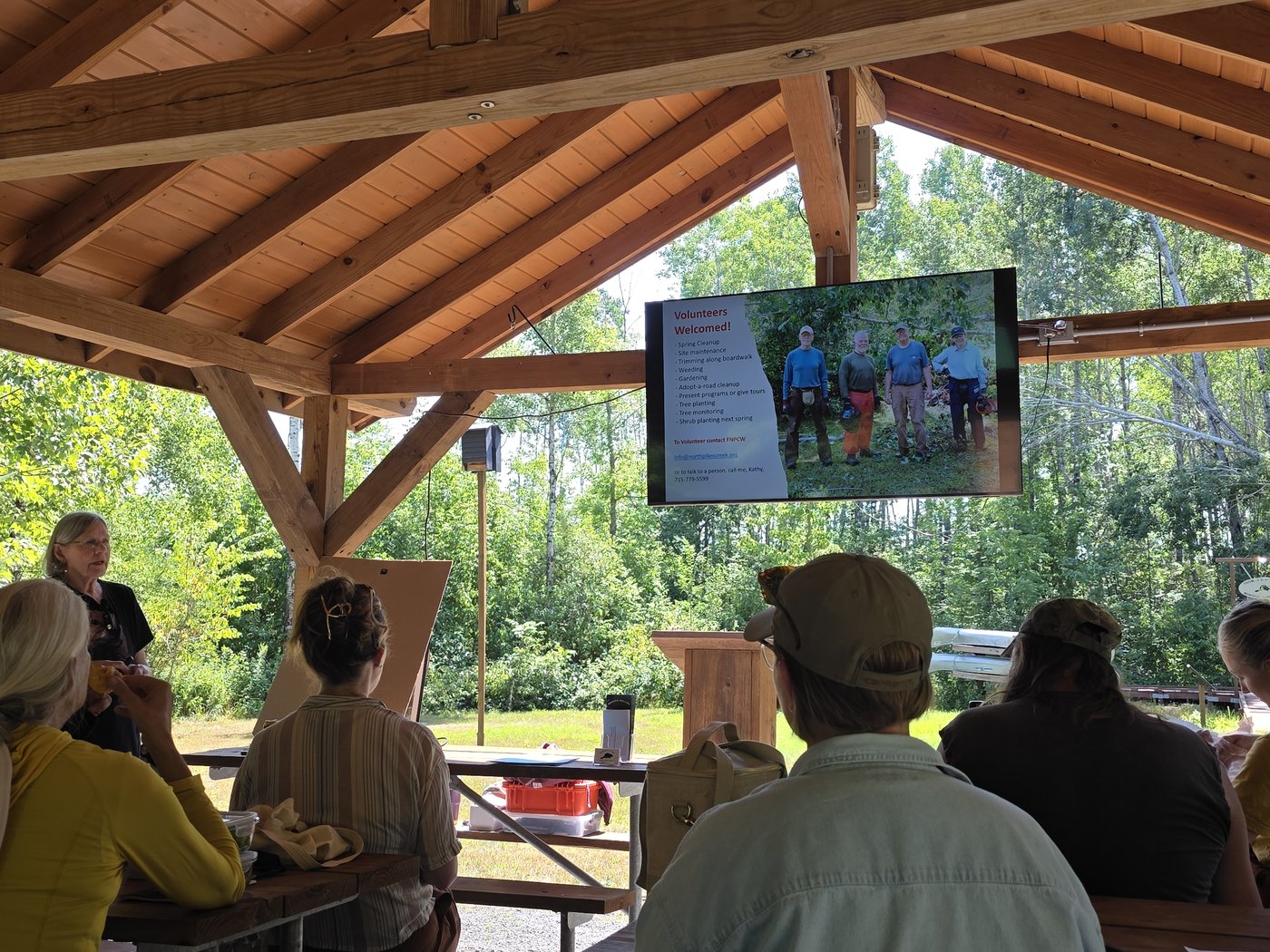
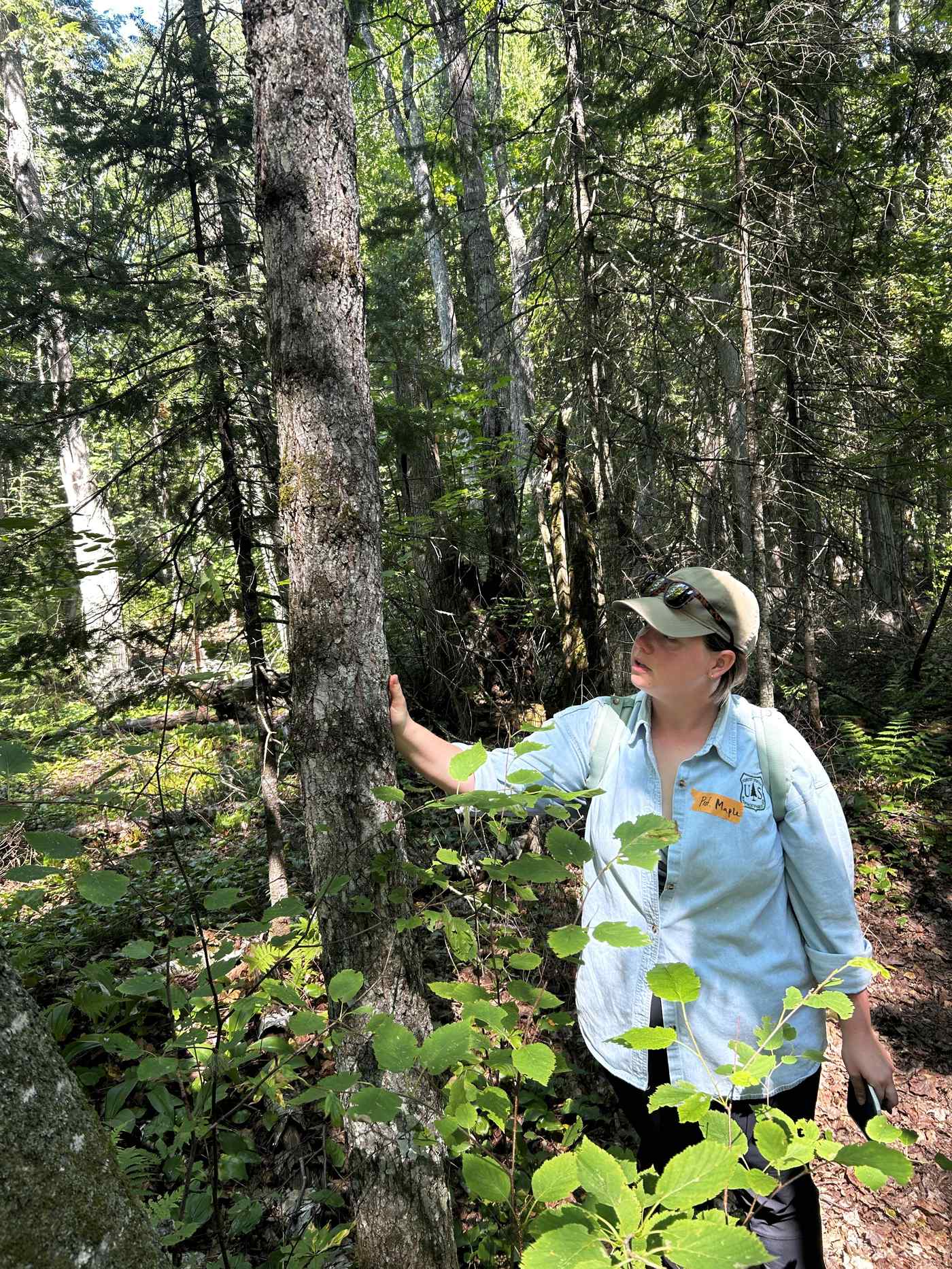
Learning about community stewardship at Beaver Hollow, and practicing interpretation skills during the "Professor Hike" at Frog Bay Tribal National Park.
The day ended at the estuary of Frog Creek, where participants were able to get into the water and experience the stream firsthand.
Saturday was based at Prentice Park. Cat Techtmann from UW–Madison Division of Extension led a natural history paddle through the Fish Creek sloughs, while Rob Croll from the Great Lakes Indian Fish & Wildlife Commission (GLIFWC) introduced the group to the Ganawenindiwag.
Esiban Parent from GLIFWC spoke with participants about manoomin, the process of ricing, and the relationships surrounding this important plant and practice. Later in the day, Rob shared the story behind the creation of the Ganawenindiwag and gave participants time to explore Prentice Park and use the guide on their own.
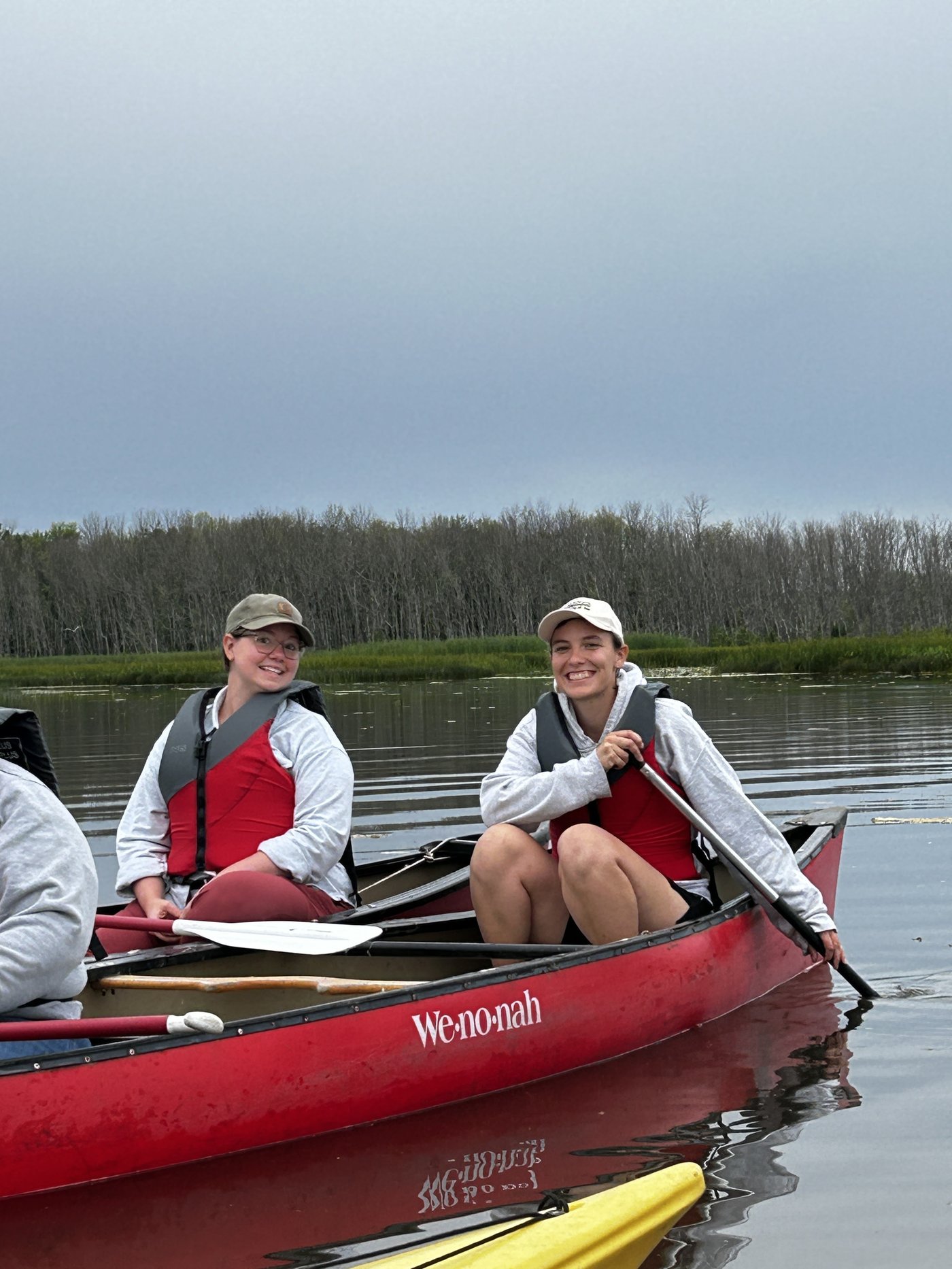
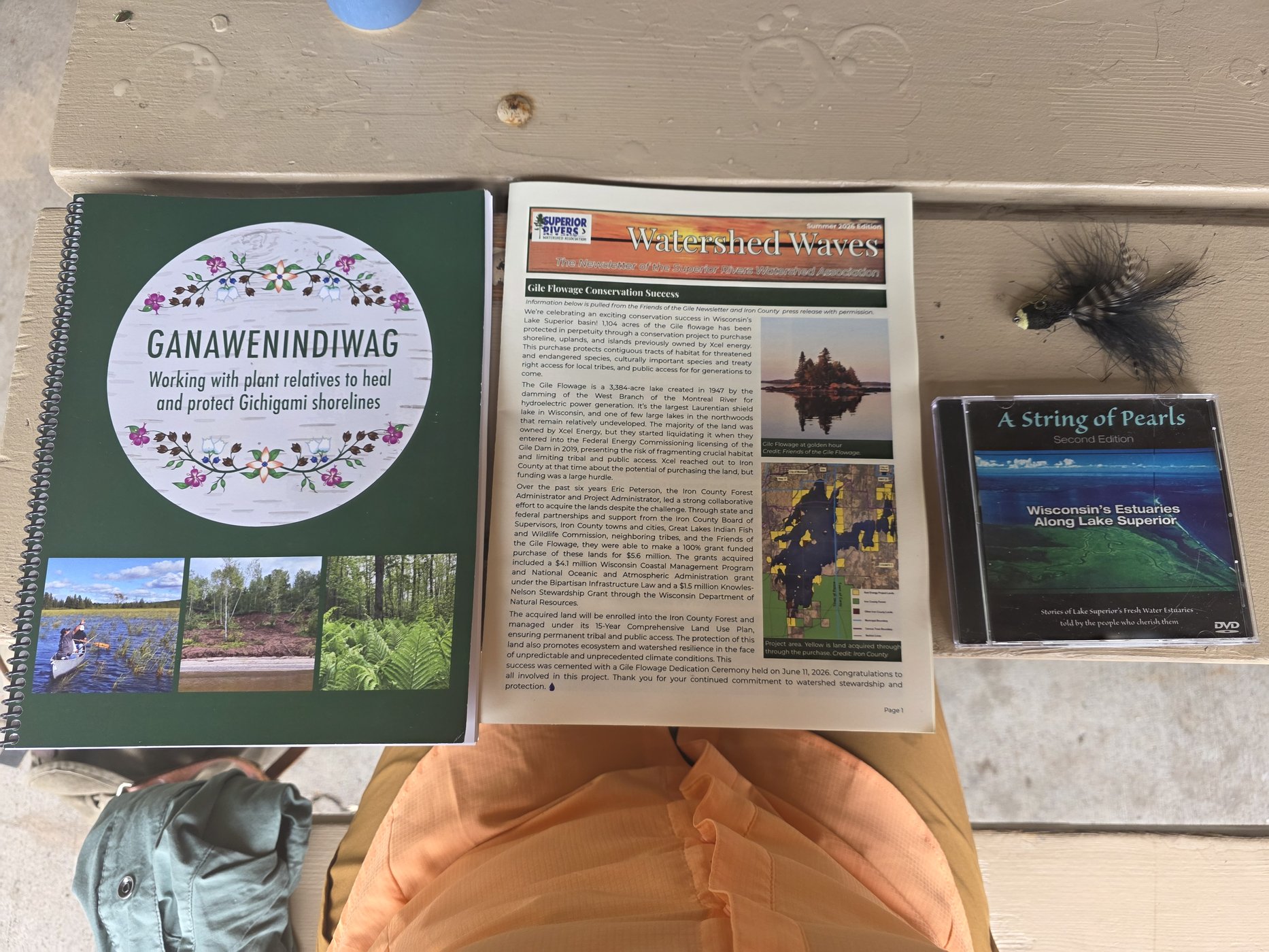
Paddling the Fish Creek sloughs, and learning about the Ganawenindiwag at Prentice Park.
The group then headed upstream to the Keystone Bluff Restoration Site with Matt Hudson, learning about more than a decade of work to restore Fish Creek, the largest sediment contributor to Chequamegon Bay.
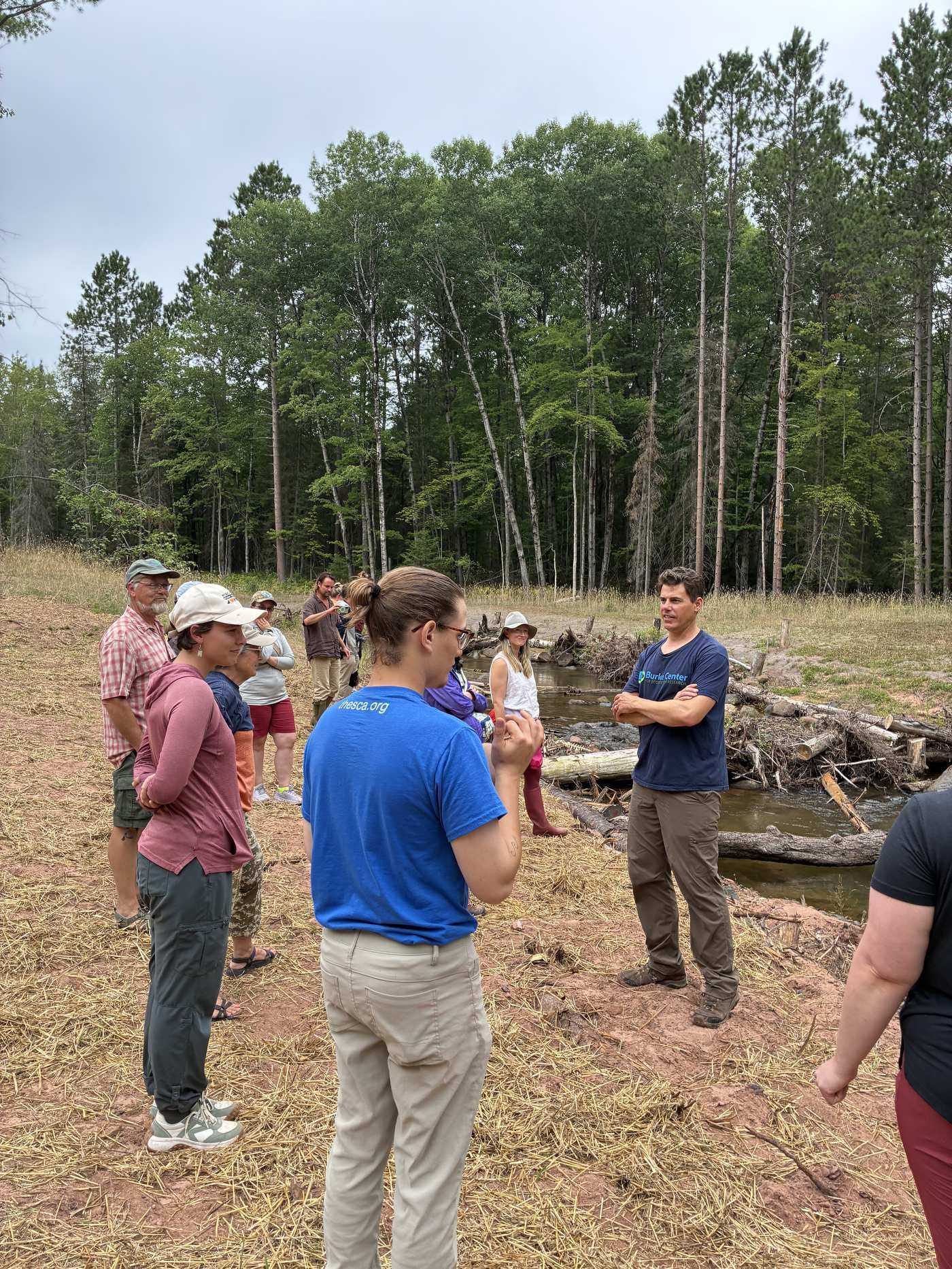
Touring the Keystone Bluff Restoration Site with Matt Hudson.
The first week wrapped up at the Coastal Classroom, where Will Kendall and Emma Holtan of the Superior Rivers Watershed Association led the group through water chemistry and macroinvertebrate sampling in Whittlesey Creek.
Later in the day, Brian Heeringa introduced participants to the region's bat populations and brought along a special co-instructor: Echo, a big brown bat. Brian also introduced the group to the barrens region, sharing its natural history and the conservation work being done to protect these unique landscapes.
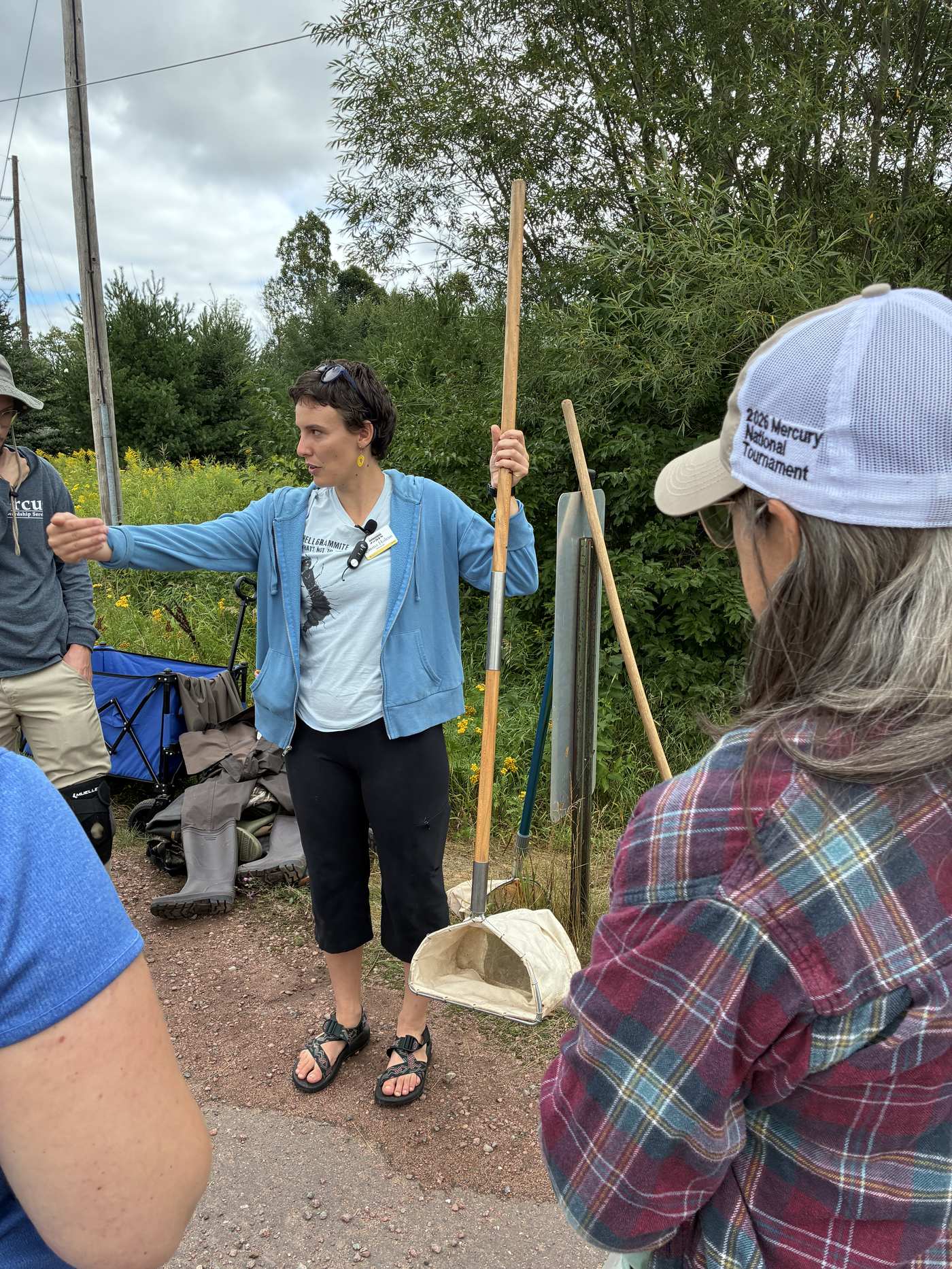
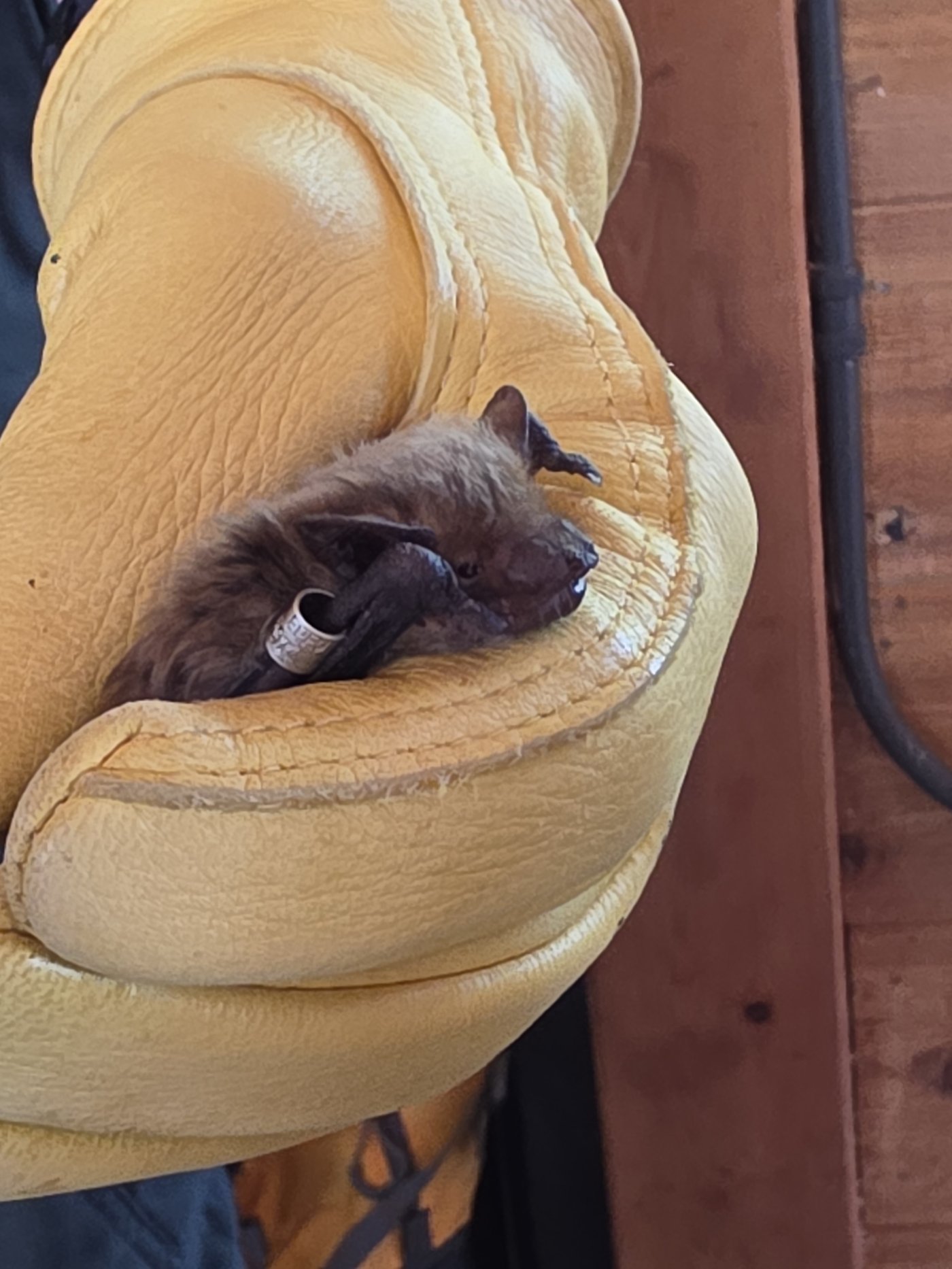
Emma demonstrating macroinvertebrate sampling technique, and meeting Echo, the big brown bat, during Brian Heeringa's presentation.
Week two kicked off with a ferry ride to Stockton Island in the Apostle Islands National Lakeshore. National Park Service staff Kasey, MaryLisa, Steve, and Ellie spent the day with the group, covering the island's ecology, wildlife, plants, and stewardship.
The day provided participants with a chance to experience the Apostle Islands firsthand while learning about the ecological resources that make the lakeshore so unique.
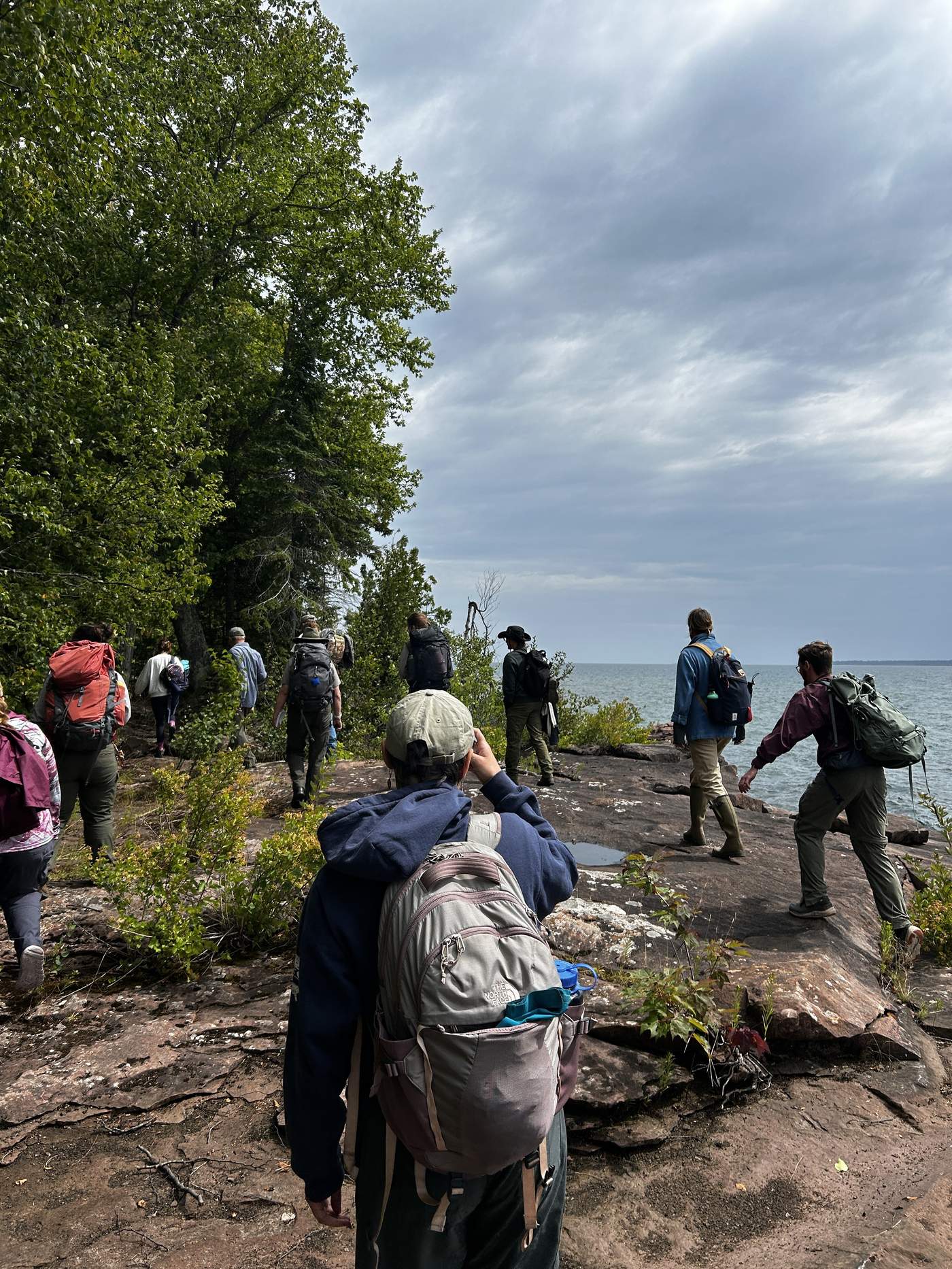
A day exploring Stockton Island in the Apostle Islands National Lakeshore.
The final day of the training began at Wisconsin Point, where staff from the Lake Superior National Estuarine Research Reserve led conversations about the Big Lake, ishkode (fire) on the landscape, and stewardship along this stretch of Lake Superior shoreline.
After lunch at the Lake Superior Estuarium, the group traveled to Pokegama Bay. Reserve staff provided an orientation to the site before participants paddled out to check the climate monitoring station and observe manoomin growing in the water. The group also learned about vegetation monitoring and the challenges facing ash trees.
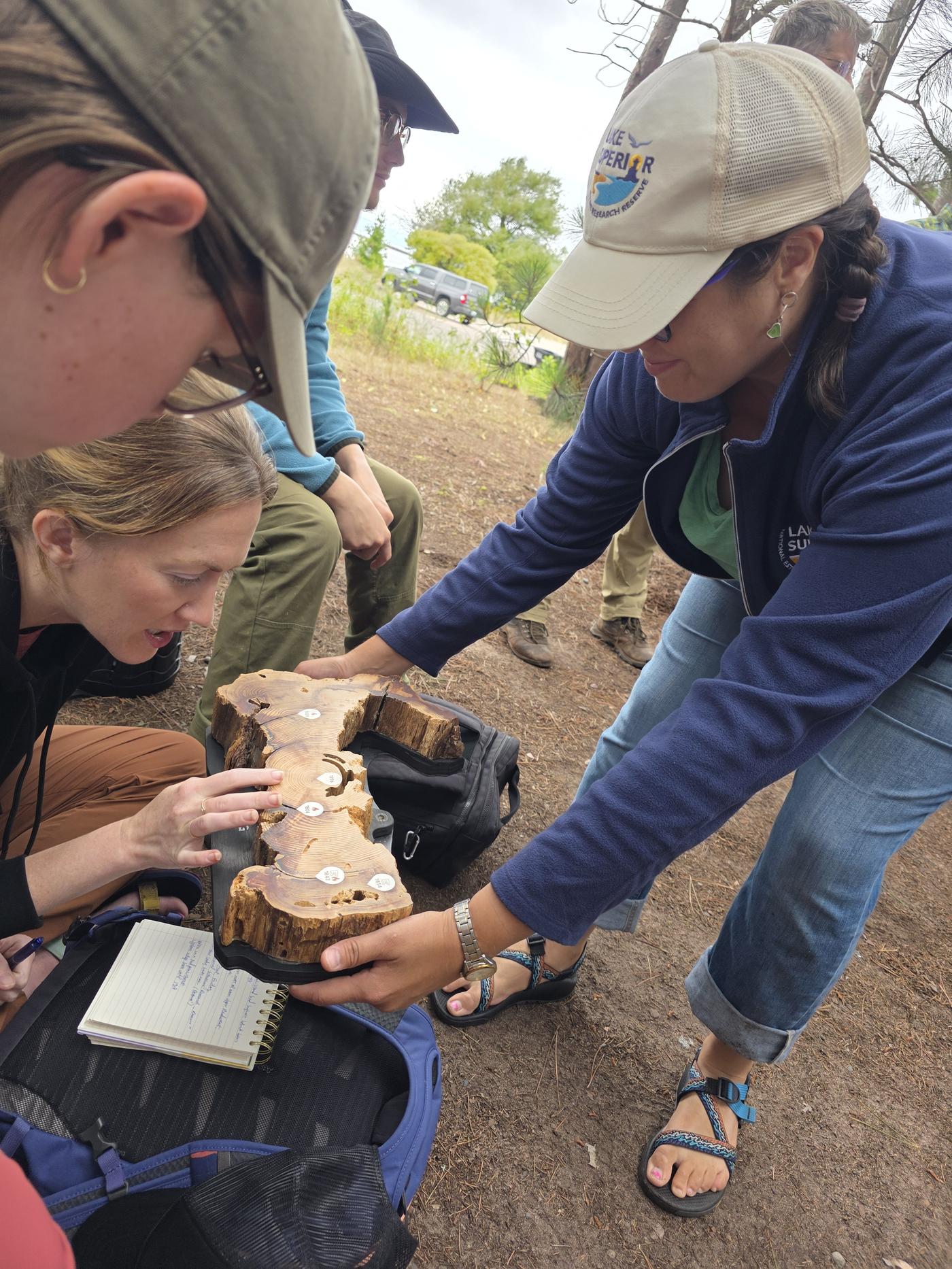
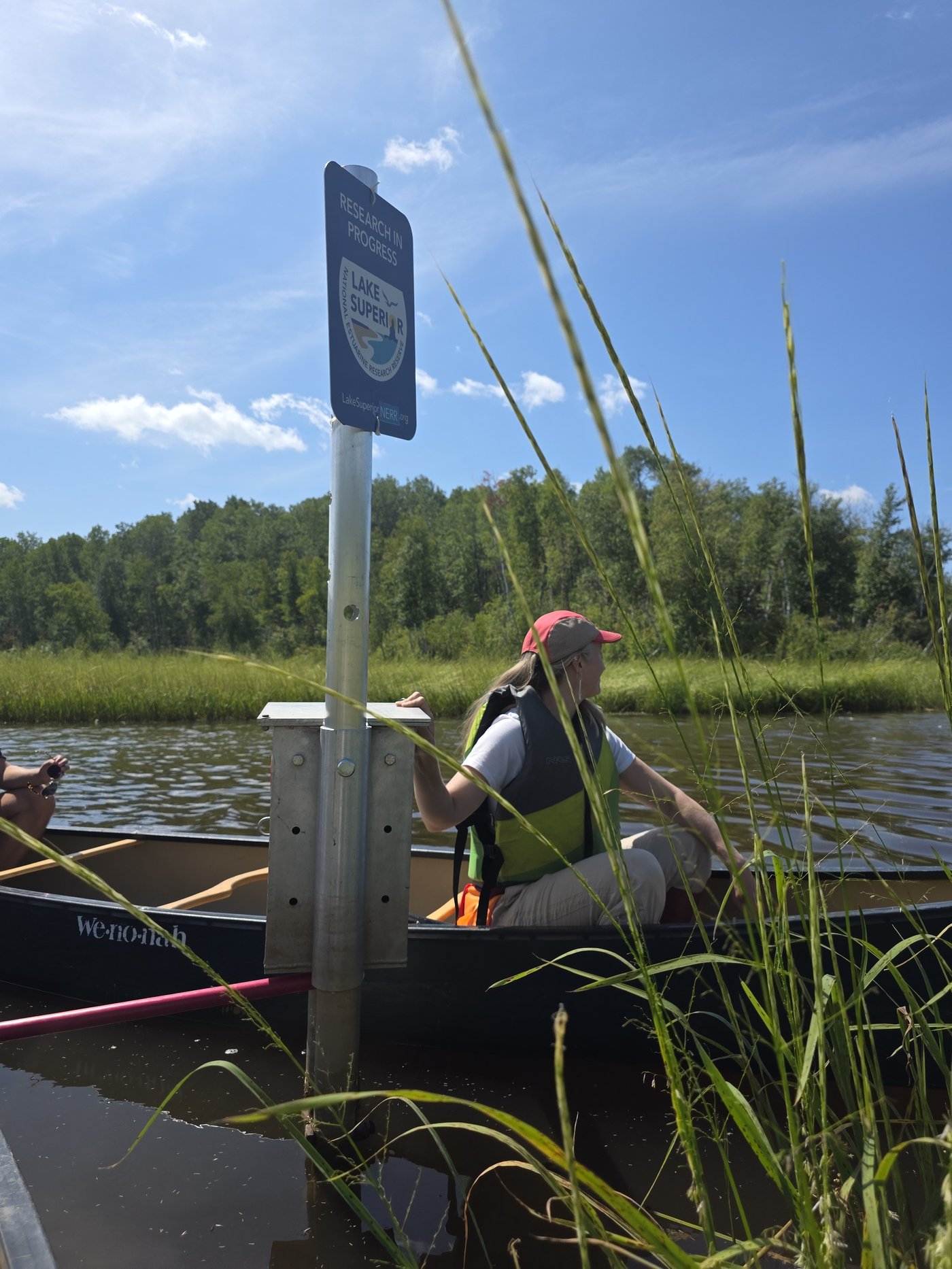
Reading fire history in tree rings at Wisconsin Point, and paddling Pokegama Bay to monitor manoomin and climate conditions.
The training closed at the Northern Great Lakes Visitor Center, where participants put their new skills to work through two different stewardship and outreach opportunities.
The stewardship group spent the morning back at the Fish Creek sloughs working to remove non-local cattails. Meanwhile, the education group staffed outreach tables at the Northern Great Lakes Visitor Center, talking with visitors about topics ranging from monarchs and animal tracks to sharp-tailed grouse, watersheds and runoff, and prescribed fire.
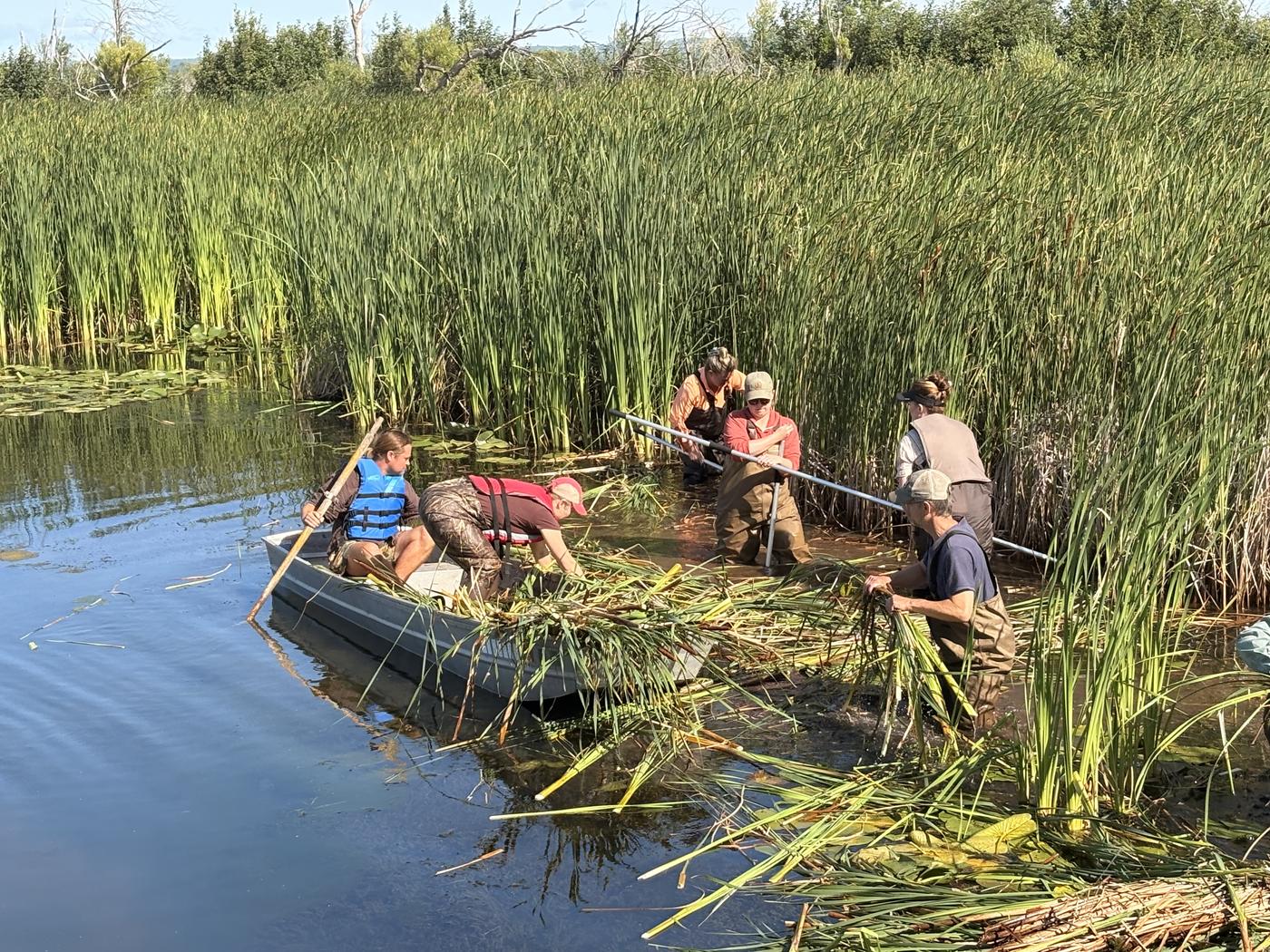
Removing non-local cattails at the Fish Creek sloughs.
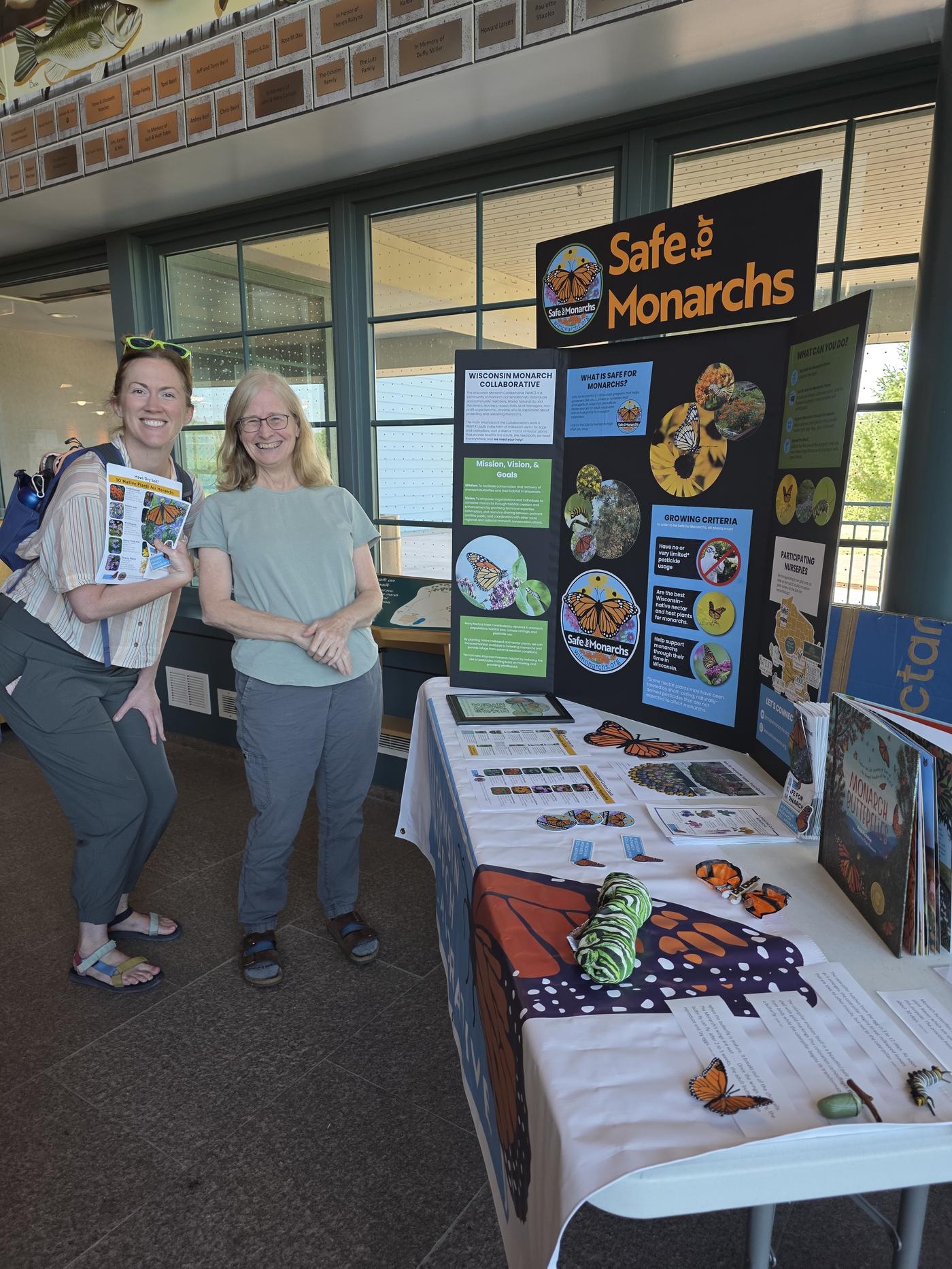
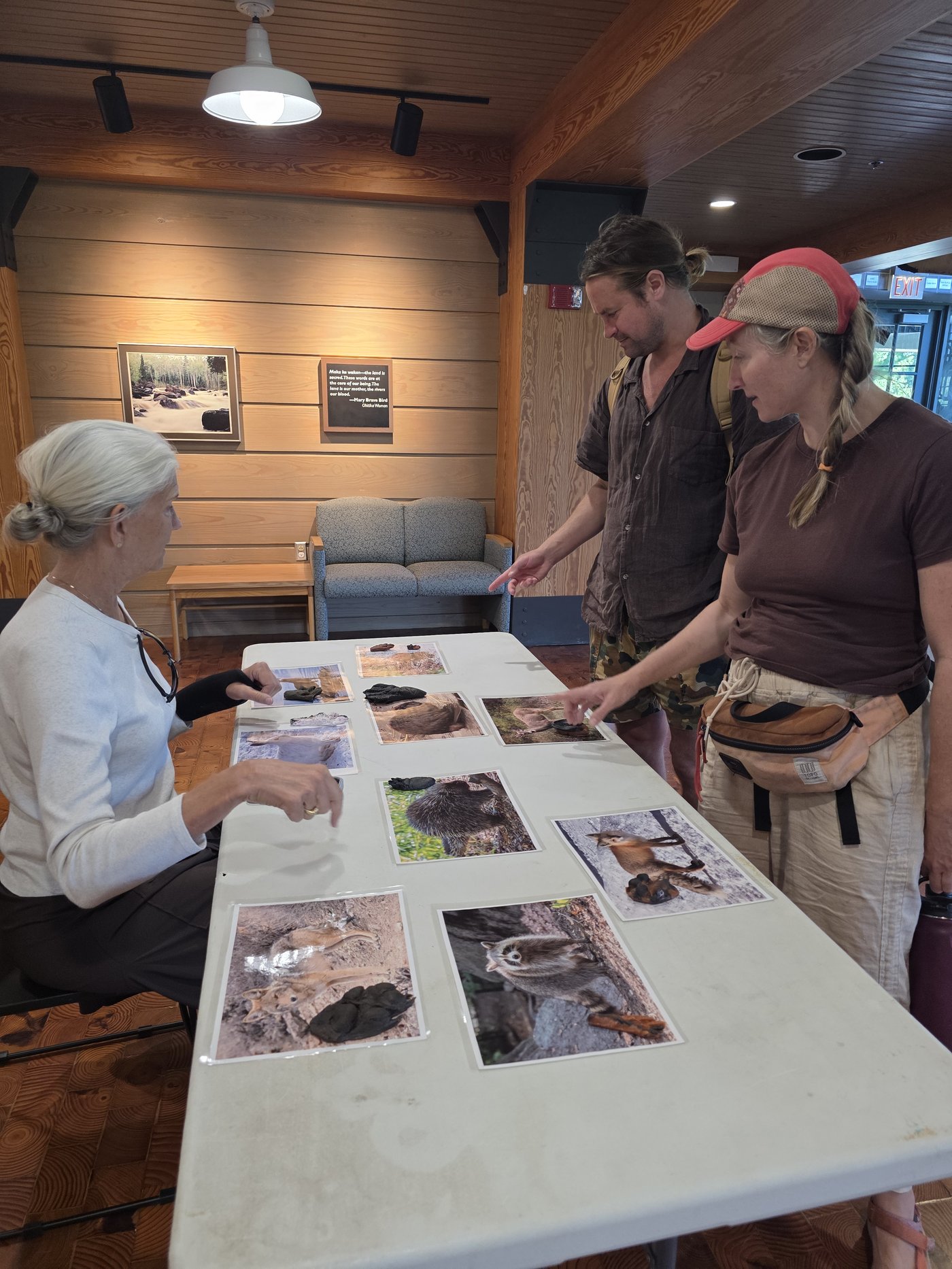
Staffing the outreach tables, sharing monarchs and animal tracks with visitors.
By the end of the training, all 16 participants had completed their Wisconsin Master Naturalist training and joined a statewide network of volunteers committed to learning, teaching, and serving their communities.
To remain certified, participants must complete 40 hours of volunteer service and 8 hours of advanced training each year. Many of the new Master Naturalists are already eager to reconnect with the guest presenters and their organizations, participate in outreach events, and continue building their knowledge through advanced training.
Perhaps the biggest takeaway from the two weeks was just how interconnected everything is. Again and again, participants heard different speakers approach the Lake Superior landscape from different perspectives, but the same connections kept emerging between stewardship, restoration, and community.
This training placed a particular emphasis on the conservation work happening across the region: the efforts to heal the landscape, restore ecosystems, strengthen communities, and bring members together around shared goals. The connections between those efforts were underscored by nearly every speaker, topic, and experience throughout the training.
Wisconsin Summit for Natural Resources Volunteers
Threads of Service, Woven Together in Nature
St. Croix River Valley · October 1–3, 2026
Led and co-hosted by the Wisconsin Master Naturalist program, UW–Madison Division of Extension, and local members, this Summit brings together volunteers, citizen scientists, natural resources professionals, educators, and land and water stewards for small group workshops, hikes, and field events. It's open to all adults interested in nature-based volunteerism, and Master Naturalist certification isn't required. Keynote speaker Sandy Spieler uses art and puppetry to inspire water protection, and a Tiny Art Show gallery and fundraising auction runs October 2.
Tiny Art Show
The Tiny Art Show is currently on display at the Northern Great Lakes Visitor Center in Ashland. The collection goes up for auction September 23 through October 2, 2026.
Attend a Training
Interested in becoming a Wisconsin Master Naturalist yourself? Registration opens in January for the coming year's trainings.