Collaboration Leads to Better Conservation on the Ground
The Headwaters to Coast Initiative helps agencies work better together
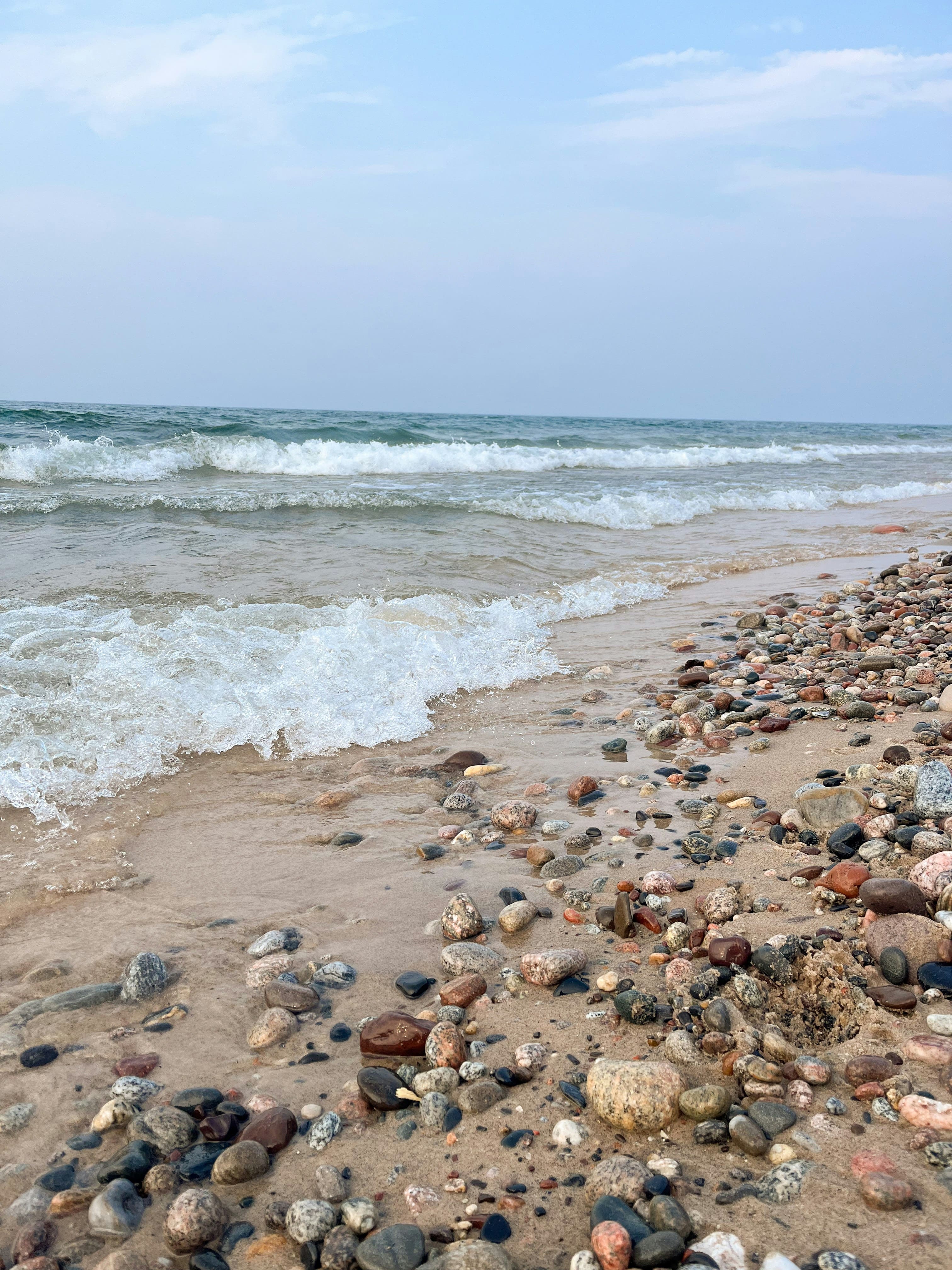
Collaboration comes naturally to the people who make conservation happen along Wisconsin's Lake Superior shoreline and adjacent watersheds. "People have been working well together here for many years," reports Catie Geib, Lake Superior Collaborative Coordinator, University of Wisconsin – Madison Extension. "The Lake Superior Collaborative has been a forum for conservation collaboration for more than 30 years."
What Is the Need?
The Headwaters to Coast Initiative is a new framework for conservation collaboration. Why did we need a new initiative if we were already collaborating on projects? Key problems were timing, capacity, and competition. Funding agencies tend to favor larger, multi-agency projects over smaller grants. Many of the agencies in the Lake Superior Collaborative are struggling to have their smaller projects funded.
"Funding for conservation projects often fluctuates in a cyclical 'feast or famine' pattern," says Geib. "Some years there isn't enough funding to do what needs to be done and other years large grants suddenly become available with very short timelines for developing proposals."
"We asked the partners what they needed and they told us that they didn't have enough capacity to put together larger projects," says Mitch Baalman, U.S. Fish and Wildlife Service biologist with Refuges. "They were competing against each other rather than working together. Staff time and availability to deliver conservation projects waxes and wanes over time. Many agencies had more staff in the past. Now they must be more strategic about what projects they take on."
"Partners across the region already had really strong conservation projects, but capacity was the challenge," says Lacey Hill, U.S. Fish and Wildlife Service Lake Superior Coastal Biologist. "Headwaters to Coast created a shared platform to identify gaps, align efforts, and work more strategically together. By coordinating early, we're able to get more done with less and make collaboration work in a practical way."
What Did We Do?
The Headwaters to Coast Initiative was spearheaded in FY 2022 by the U.S. Fish and Wildlife Service's Refuges, Coastal, and Fisheries Programs via a funding opportunity known as the Great Lakes Restoration Initiative from the Environmental Protection Agency (EPA). "The Initiative is a framework or 'blueprint' for local agencies to work together by finding overlapping conservation priorities," says Baalman. "Conservation blueprints like Headwaters to Coast are being developed all around the Country with the goal of becoming more collaborative. These blueprints are popular because they are breaking down agency 'silos'. They help agencies collaborate rather than compete and that's a win-win for everyone."
The Headwaters to Coast Initiative helped to fund staff positions in the U.S. Fish and Wildlife Service and in the University of Wisconsin – Madison Extension to build capacity for coordination and technical assistance. The Lake Superior Collaborative 'adopted' Headwaters to Coast as an initiative under their umbrella to provide oversight and guidance and avoid duplication of effort. From FY 2022–2025, several workshops were held to clarify the Headwaters to Coast Initiative's goals, objectives, and strategies; several rounds of grants were also funded.
"This initiative isn't just about better grant proposals – it's about changing how we work together," Hill says. "Headwaters to Coast supports strategic, deliberate collaboration where partners develop a shared vision and turn it into coordinated, on-the-ground conservation projects." This involves getting wider partner input on project ideas early in the process so that project ideas can align with the overall collaborative vision in the region.
What's A Pitch Party?
The Headwaters to Coast Initiative developed a new approach to building collaboration called a 'pitch party'. Early project ideas are 'pitched' to small teams of conservation partners and/or funding agencies, often long before grant opportunities are released. Peers and funders provide rapid feedback to make the project better or more collaborative. If project ideas have similar objectives, methods, or occur in the same general location they may be 'packaged' into a single, larger proposal, based on this feedback. These larger, more collaborative projects are judged to have a better chance of success during the funding process, no matter the source of funding. Funding agencies can also help guide projects in a direction that is more likely to be funded when they have an opportunity to comment on early ideas. The resulting projects also provide more comprehensive conservation on the ground by addressing multiple objectives in one locale or similar objectives in multiple locations.
"In the past we'd get a grant funding announcement from somewhere a month before proposals were due. Now we're building on ideas, building collaborations, and we have proposals ready to go that meet our highest priority conservation needs. We have our horse before the cart, so to speak!" — Mitch Baalman, U.S. Fish and Wildlife Service
"When partners come together early – before drafting grant applications – we reduce duplication, build momentum and improve projects in real time," Hill says. "By focusing on shared watershed priorities like habitat connectivity and water quality, Headwaters to Coast helps align resources and effort where they are most effective."
"It's a great return on investment in terms of time," says Geib. "Agencies can propose ideas in an informal setting, either in person or online. The 'pitch' might be only 10–15 minutes and addresses the need, the geography, the species or habitat target, and the estimated cost. This is followed by feedback from peers and funding agencies. There may be follow-up after the meeting; for example, connecting staff with others with similar interests."
One example of this packaging strategy that arose from a pitch party was a project in Ashland County where several different agencies wanted to replace road culverts. "The agencies worked together to identify four culverts that addressed priorities like brook trout habitat, public health and safety, and public access," says Baalman. The proposal that was funded included multiple culverts in different locations. The agencies pooled their resources in terms of expertise, equipment, and capacity. One agency took the lead for grant writing, another provided engineering for all the culverts, and the highway department had staff and equipment to do the culvert replacements.
Another example of a successful project that started with a 'pitch' was Muskeg Creek in the pine barrens of Wisconsin. "The original project proposed the removal of brush from streambanks," says Geib. "Other partners were concerned about trout stream habitat and how brush removal would affect the trout. The final project includes pre- and post-monitoring of the stream to learn how brush removal affects trout. The woody material that was removed was used to improve in-stream habitat conditions for trout."
Project ideas that have been submitted to Headwaters to Coast are collected in a database so that we have a pool of ideas to tap into for future development. "This really gets us ahead of the curve and demonstrates the extent of unmet needs," says Baalman. "It also helps us explore new opportunities for cross-agency collaborations in the future."
The pitch party process leads to better, more efficient conservation on the ground, with multiple agencies combining their strengths to get projects done. It also ensures that the grant funding is addressing locations on the landscape that have high needs or high potential for conservation.
What's Next?
"The Headwaters to Coast conservation blueprint is not a static plan," says Baalman. "It will constantly evolve but remain a framework for developing collaborative work plans that meet the highest conservation needs in our geography. We need to constantly look at the landscape and ask ourselves – what do we need to advance conservation?"
In the end, it's strong relationships and trust that make a difference. "The stronger our relationships, the more resilient our projects will be," says Geib. "My colleagues in Extension across the state and I agree that little is going to get done in conservation without strong collaborations going forward. If we're nimble and work together, we'll have better conservation outcomes. Relationships and trust are built because we're collaborating instead of competing."
"This initiative proves that strong relationships and shared purpose are not just values – they're strategies," Hill says. "Headwaters to Coast is creating a collaborative model that allows partners to pool capacity, align efforts, and move conservation forward in a way that's both innovative and grounded in real results."